
Hanna's Last Days
Hello dear people,
This is Marc writing. I want to write to you about Hanna’s death. You know she was diagnosed with ALS in March of 2023. You know she continued to live, love, and create intensely. She died on February 1, 2026, and since then we’ve said little to all of you who constantly loved and supported her.
So I want to write to you about her death. I’d like you to know about the moment, and the days before and after. That might sound difficult to read. But I invite you, as you are able, to read.
For most of my life I avoided imagining what it might be like to stand at death’s door, knowing I must walk through. Our culture says this is the worst moment, a moment of devastation, and I learned to look away. So I didn’t see the possibility that Hanna taught through her last days. I know she was sometimes afraid. She told us she was. Then, standing at that door, she opened it and strode through. Having seen her do this, I feel less afraid to follow.
Those last days were not easy. Those last weeks stretched us . We found we could stretch farther together. When the hour came, it was beautiful.
Preserving the Choice to Choose
In July of 2024, a group of us motored with Hanna down the long road to Vermont. Two days in a van was difficult for someone whose body and breath were so fragile. We rolled along together, accompanied by soulful podcasts and constant questions. Breathing okay? Comfortable? Any pain? Rest stop french fries. Roadside cough assist to clear Hanna’s throat. Two luggage carts to get all the gear into the first night’s hotel.
Why risk travel? To defend Hanna’s ability to choose how and when she died. Vermont is the nearest state with a MAID clinic. MAID stands for “Medical Assistance In Dying.” In a few states in the US, the law allows doctors to help people choose their own death. When someone is ready to say, “I can no longer bear living. I choose to die,” a MAID clinic can help. Hanna was not then ready for that decision, but by visiting the clinic she could gain pre-approved access to their services.
ALS is a thief. Hanna insisted that while it might steal her body and her life, she would not allow it to have her aliveness. She would find fullness of life until she could find it no longer. Then she would fill the moments of her death with as much aliveness as she could, together with people she loved. If we didn’t defend it, the thief would steal something else: her ability to shape her death as an act of care.
For many months, that was the story we held: when the time came, we would return to Vermont. Hanna, …and well, me, I think all of us, were resisting what was happening as her symptoms progressed.
But by the summer of 2025, it was clear that Hanna would not be able to make another trip to Vermont. Even if she could, she would leave behind so many of those she wanted close in her last days. The hospice nurses in Pittsburgh gave her a different path, which required no clinic and no travel. “When you are ready, you can simply stop using your ventilator. Your body will do the rest. We can make sure you are comfortable through the process.”
This gave Hanna peace. She could keep her choice, and her people. She could die at home.
In this story I often refer to “us” and “we.” “We” are a group of eight or ten people who formed the enduring core of what we call “Careforce.” Over three years, about thirty people were directly involved with Hanna’s hands-on care, and many more actively provided tangible and emotional support. That’s Careforce. A smaller group managed process, logistics, infrastructure, and handled issues and crises when they arose. We called that group “TLC.” The “us” in this story refers mostly to TLC in various combinations, with others in Careforce often involved. I know I commit omissions by naming names, but I must mention Hanna’s partner Seth, Ti and the Erika we call Akie—who made an adventuring trio with Hanna, the Erika we call Goldie, Lizzie, Michelle, Marin, and Claude.
Designing Death
What would a beautiful death really be like—the days before, the day of, the days after? How did people do it before death became an industry? Our usual customs of death leave little room for relationship. The body simply goes away, then briefly reappears for a cookie-cutter gathering. What would it look like to seek a more alive relationship with death?
There’s a theme that runs throughout Hanna’s life, and throughout her illness: when we turn to meet the monster—the thing we fear, the thing we would rather avoid—we open the possibility of a relationship with it.
Starting in 2024, before the Vermont trip, a subset of Careforce gathered to explore and design with Hanna, helped by experts like Didi the Death Doula. They referred to themselves as “The Death Bureau”—a name that doesn’t flinch—and continued to meet for more than a year.
Soon after Hanna’s diagnosis, a group of us attended a “death café”—an open conversation about death and dying. I felt awkwardness in myself and saw hesitation in others during that conversation. “Can I really talk about this right out loud with all these people?” So yes, Death Bureau: “Yeah we’re talking about washing the body, what about it?”
A scan of the group’s notes shows topics like:
– Spaciousness
– Music
– What experience for those far away?
– Rituals at different points in the process
– What Hanna wants, and what she does NOT want
– Caring for the caregivers—what is the design for them?
– How to hold space for grieving
– The experience of Seth’s kids
– Invitations: ways others might expand their own relationship with loss and death
Symptoms Progress: 2024-2025
Hanna had clear metrics for her choice. Here is something she said, using her Tobii gaze-tracking speech device:
I will live as long as I can be in community, care, communicate, create, love and be loved.
Those things all became more difficult as the disease progressed. Hanna’s care became more time-consuming. She grew more dependent on her ventilator to keep her blood oxygenated and clear her lungs of carbon dioxide. Her neck became weaker, making it harder to turn her head.
Please support my neck. My head is a bowling ball on a pool noodle.
She fought for time to write, to make essays for her film, to revise the manuscript of her next book. She worked thoughtfully, iterating and searching for words. It mattered greatly to Hanna to offer voice to the world, to share the possibilities she saw. We can, she believed, learn to make a better world together.
I lie awake at night and compose whole essays. I’m on the ventilator 18 hours a day. That provides quality of life. And I still have creative juice.
Still, The Question was often on Hanna’s mind. Is it too hard to live? Are the few minutes she has to write, to be with those she loves, to give and receive, are they worth the hours of fighting simply to continue existing? Is her work complete enough to trust it into the world? Is it time?
By winter of 2025, the risk felt awful. The weight of care had stretched the team beyond its limits. And we worried that any time a crisis of pneumonia or infection would rob her of the end we had imagined together.
We seriously considered a move to a “Skilled Care Facility”—an institution with nurses trained to care for patients who need serious and complicated care. Here is Hanna, telling a friend that caregiver burden and the realities of moving to an institution had led her to a momentous decision:
My core support team feels burnt out. I’m living longer than anticipated. They have asked me to go into respite care with an eye on transitioning into a facility. I’ve spoken to my pulmonologist, a hospice nurse and her aide. They all agree that those facilities aren’t set up for the level of care I need. So to honor my friends’ resources and wellbeing, and not putting myself in a situation that goes against what I hope for my last days — TV, shared rooms, nurse attention split between 12 patients, increased infection risk. I have, with a heavy heart, decided to go off my vent in the next ten weeks, depending on my care team’s needs.
Just a few days later, Hanna changed her mind, saying,
I realize I still have reasons to live.
More creating. More loving relationship. More life.
January 2026: The Relief of Letting Go
One night in early January, Hanna’s partner Seth and volunteer caregiver Steph were on the “bedtime team.” Usually that ended around 10:30 with Hanna tucked in, blankets and pillows arranged, ventilator on, feet just so, medicated and ready for sleep. But that night, Hanna was struggling with a sore throat and sticky mucus. It was the first night of strep throat.
Seth and Steph stayed up with Hanna for something like eight hours that night, trying to use the suction machine to collect the thick phlegm that gathered deep in her throat. They were unsure of the technique, and Hanna’s breath was in crisis. At last in the early hours a hospice nurse arrived, and swept the flexible orange tube deeper than anyone had dared. A few noisy and forceful seconds later, the nurse withdrew the tube. They all looked at Hanna. Hanna looked at them, and broke into a smile like the sunrise. That wasn’t the end of the strep, but now we had been shown how to handle the worst of it.
Weighty questions and conversations shadowed December into January. There was an atmosphere of unraveling. How do we fill the schedule as paid caregivers roll off to other jobs, the volunteer group is spread thin, and the work of care becomes more technical and more demanding? How do we collaborate with Hanna on the conditions for her thriving life? People did a lot of research. We talked a lot.
In the third week of January, Hanna’s therapist Amy came to Hanna’s house, “The Oasis,” for their weekly session. They met privately, but I can tell the story based on words from both Hanna and Amy. There came a point when Amy asked some version of the question, “Do you still want to live?”
In response Hanna said,
Do I still want to live? When is a good time to say goodbye? What’s keeping me here is the cocoon of the oasis. Community. Loved ones. Writing. To be realistic, I’ve hardly written in the last months. Because I’ve been sleeping and ill. My eyes grow tired too, much quicker than before. I’m on vent more.
What keeps me here is the belief that I’ll have enough time to wrap up well. So many itchy spots in the writing, the next book. Need to gift what wants to be gifted. Find an NGO in South Africa to channel royalties to.
Amy asked for Hanna’s permission to be blunt. Hanna nodded. Then, in response to Hanna’s “what keeps me here” list, Amy said, “That’s mean.” She remembers watching Hanna’s face open in surprise, and possibly relief. Amy clarified: “That’s mean to yourself.”
Amy told me, “I wanted to be certain she understood I was speaking about the impact of her expectations on herself, rather than on the exhausted Careforce, because I knew she wanted to relieve her loved ones. This was something else.” Then, “She appeared to be grateful. I think she may have said as much.”
Soon after, Seth sent us a note: “…This evening Hanna talked through her feelings with Amy and discovered an important shift in how she is thinking about moving forward. This realization will impact us all and she feels an urgency to share with you all as we plan next steps together.”
We gathered at the Oasis with Hanna the very next evening. Hanna opened with this announcement.
Last night I met with my therapist and discussed my reasons to keep living and pushing on in a dying body. She was frank and asked for consent to be honest. She said something I’ve been touching. That it’s my time to go. What keeps me here are all made up obligations. My body is ready. The things I would like to do aren’t being done, because I’m just coping.
We have this gift of time to choose death and consciously step into it. I am ready to go.I promise to be here for u as much as the afterlife allows.Thank you for letting me go.How do you see the next practical step?Oh lord I need to poop
Hanna said this, then asked the group how they felt. “How did that land with you?” I think Seth was the first to reply. “Relieved,” was the gist of his answer. And mine, and everyone’s. We agreed: let’s avoid the threat of death by crisis, a choking incident or illness at home that was beyond our best ability to help, or something similar at a facility with Hanna alone and mute. So yes, relief even though this meant the final loss, because Hanna had chosen, and we were with her in that choice.
We asked Hanna the same question. “How are you feeling?” She replied,
Relieved. It’s become so much harder to live. My suffering is exponentially more.
Hours later, she still felt the same.
I’m counting the days,yo. My mind is set on departure next weekend
Here’s how she explained this choice to others, in a note stored in her Tobii so she could repeat it through the many visits she had through the following days:
So you know things have been difficult for me and my carers, yes?The phlegm has moved into my last frontier, my lungs. It’s in my lungs. Which is how als works. When your lungs get moist like mine it’s a matter of time before you get pneumonia,. And we’ve tried every medication to clear it. Antibiotics and steroids. It’s really suffering to be in this body, right now.So we have decided for me to go off my vent next weekendNot a crumb of doubt.I’m so ready to go. I’m tired of being ill.I feel a deep peace and a relief about leaving this body behind.
The following week was a blur of care-as-usual combined with detailed preparation and visits between Hanna and her people near and far, including Elsa and Eben, her mother and father in South Africa.
One essential task was to coordinate with the hospice nurses, so a few of us could be trained in the logistics of Hanna’s last hours. What dose of which medications? Administered how, and how often? What should we expect to see as we watch the process? What could go wrong, and how should we handle that? The nurse gave us documented details, so the unthinkable became just another procedure like the dozens we had learned before. I remember breathing a long sigh after that briefing.
Hanna described the process this way:
Here is the dying process. We don’t know how long it will take for me to die. In order for my body to die, I have to not have enough oxygen. In other words, my body will build up enough Co2 for me to suffocate. It will be very gentle and peaceful. I’ll start like this, in bed, conscious. Then I will stop using my ventilator. I’m currently on it 19 hours a day. When I feel like i need it, I’ll take medication instead, helping me to not feel panicked without enough air. The process will continue until I’m unconscious. We believe a nurse will be here giving me meds to help me stay asleep until my last breath.
January 31, 2026: The Last Day
What was it like, Hanna’s choiceful death? In April of 2024, twenty-two months before her passing, Hanna wrote an intention.
May I rest into and be saturated with love, so that my being and actions radiate love.
That intention was the foundation for all those detailed instructions, written in collaboration with the beloved friends who made up the death bureau. With Hanna’s clearly-expressed and unwavering decision, it was time to enact those plans.
It happened like this….
People gathered
There were many moments and conversations I was not present for, and which aren’t mine to tell. Nurse Nancy, our hospice nurse, came to make sure that Hanna was secure in her decision and confident in the process, and that her care team was equipped and trained for what was to come.
A schedule was made and invitations sent, so people could come have time with Hanna during the last two days. These were moments when they and Hanna could say what needed to be said. To feel the impact and presence of each in the others’ life. To say “I love you.” To make some kind of closure.
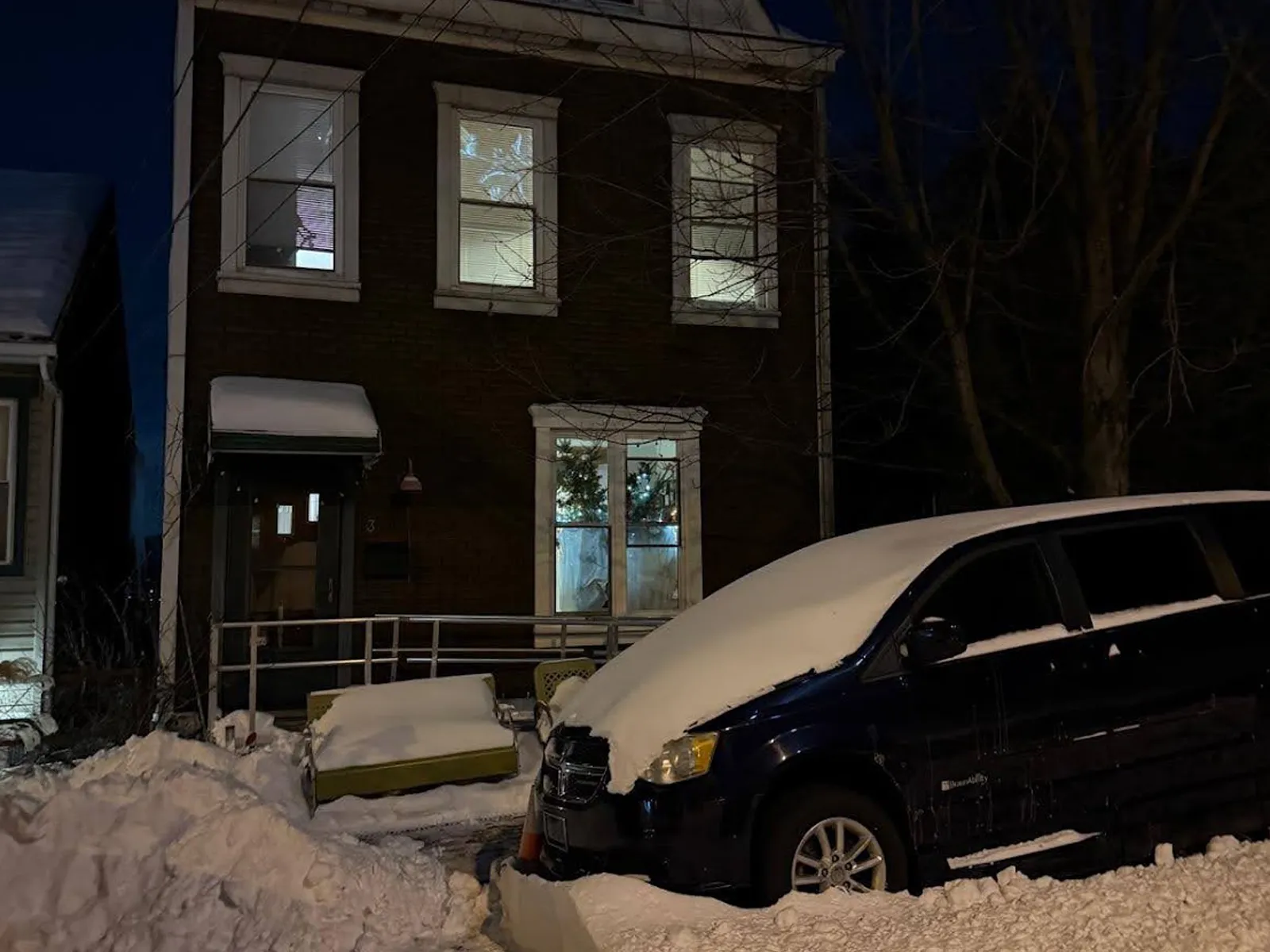
At the same time, people were together in the kitchen, in the upstairs rooms, in the snowy street. What was said mattered less than the fact that we were together.
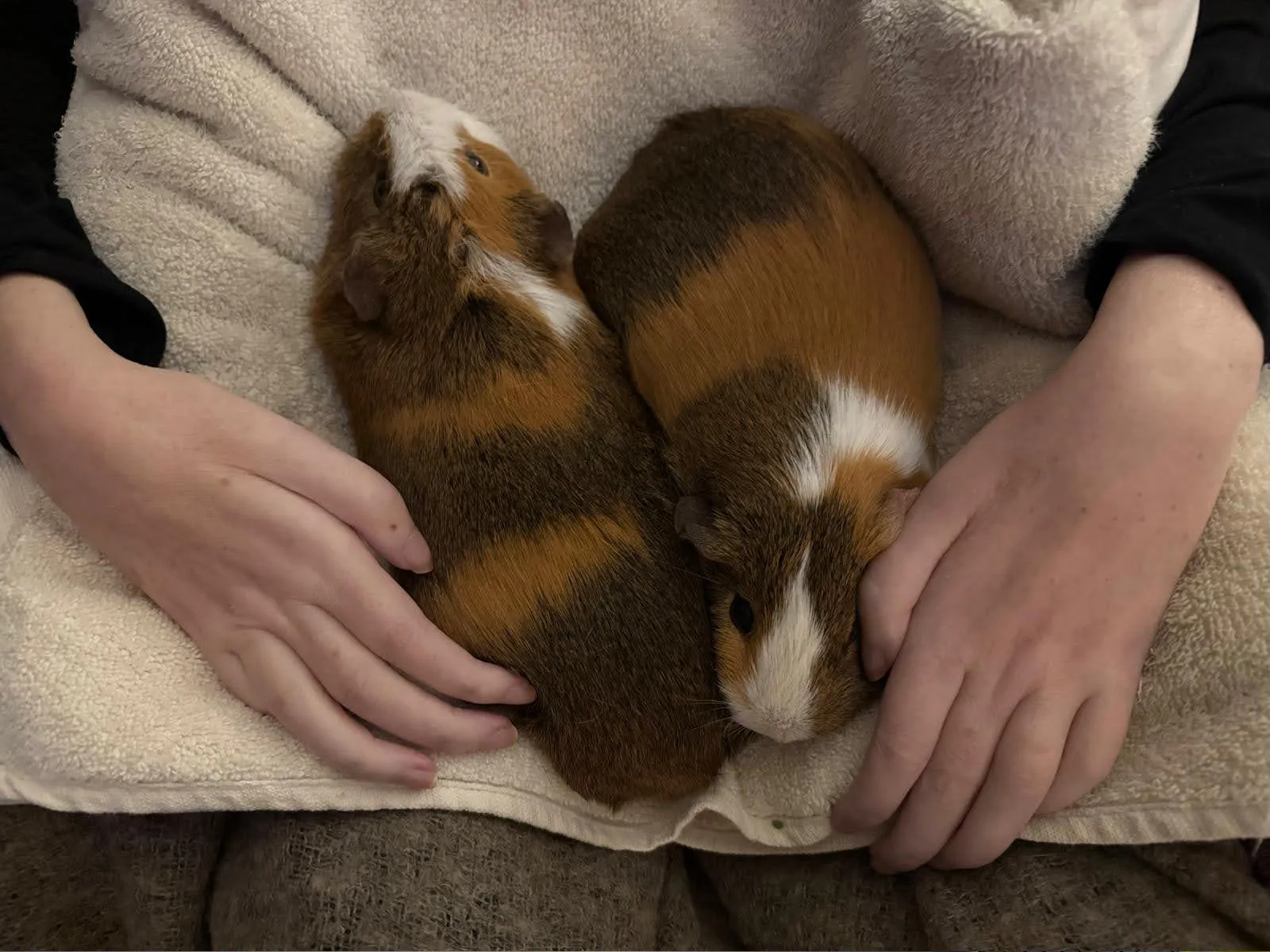
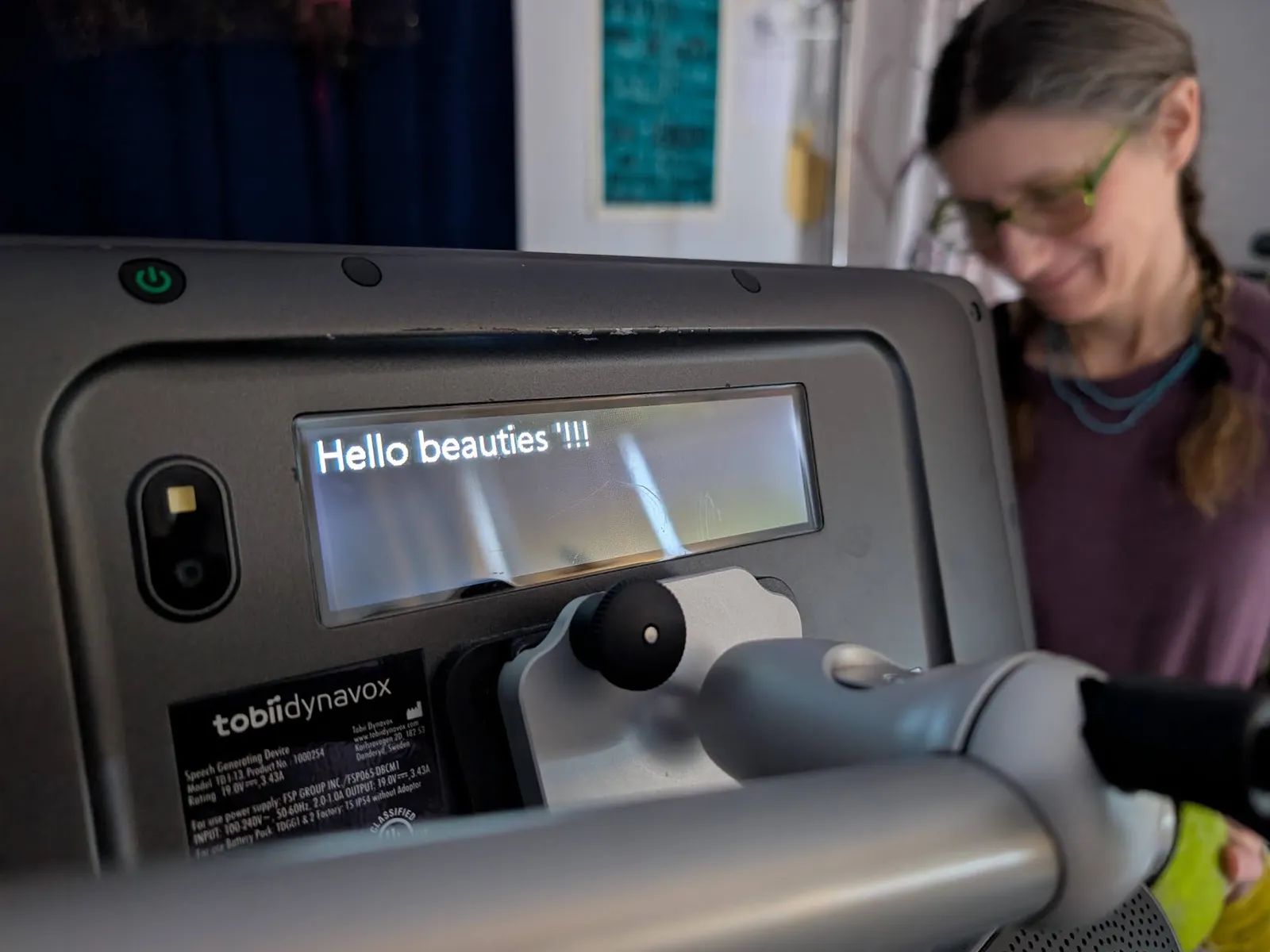
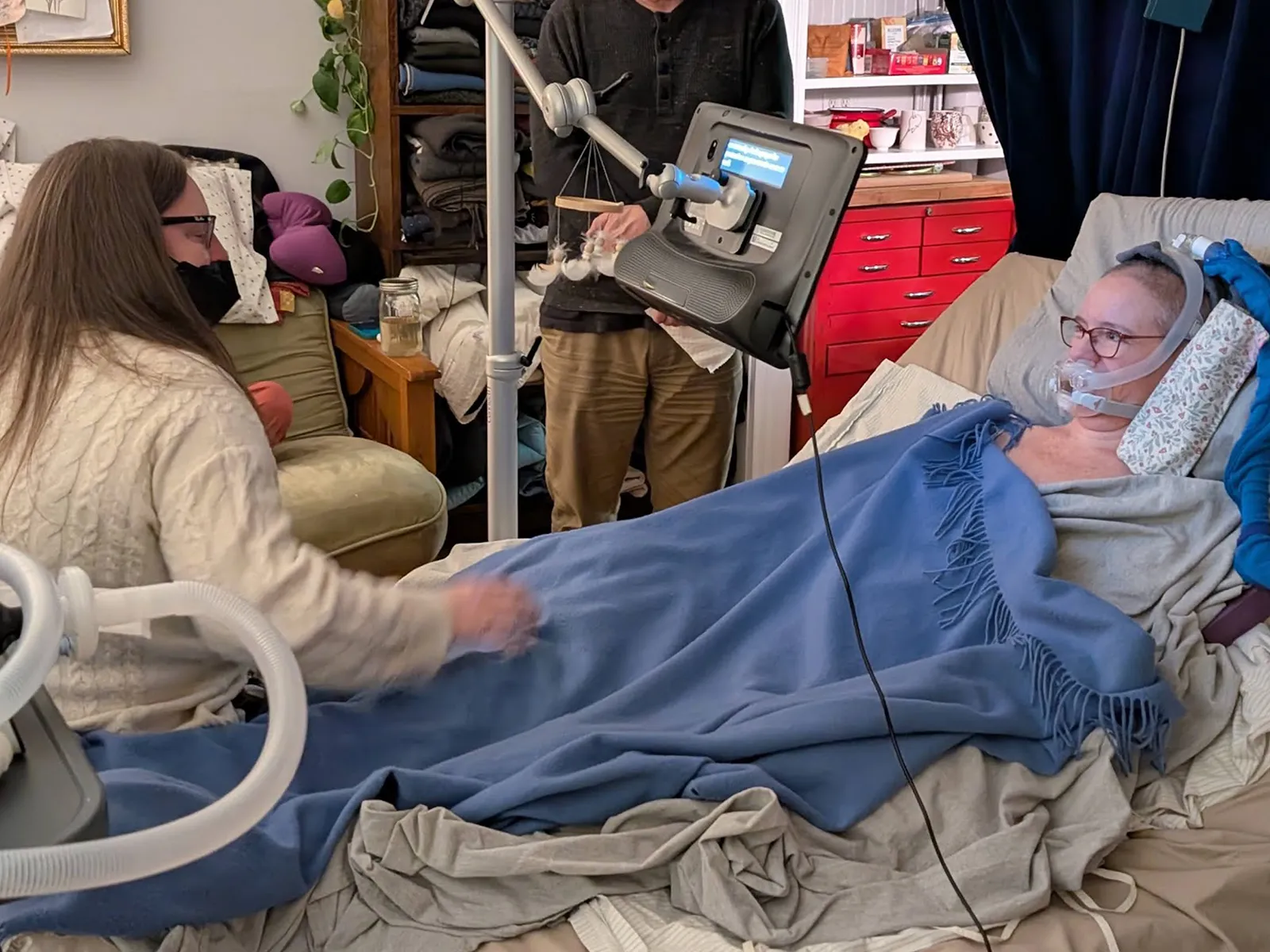
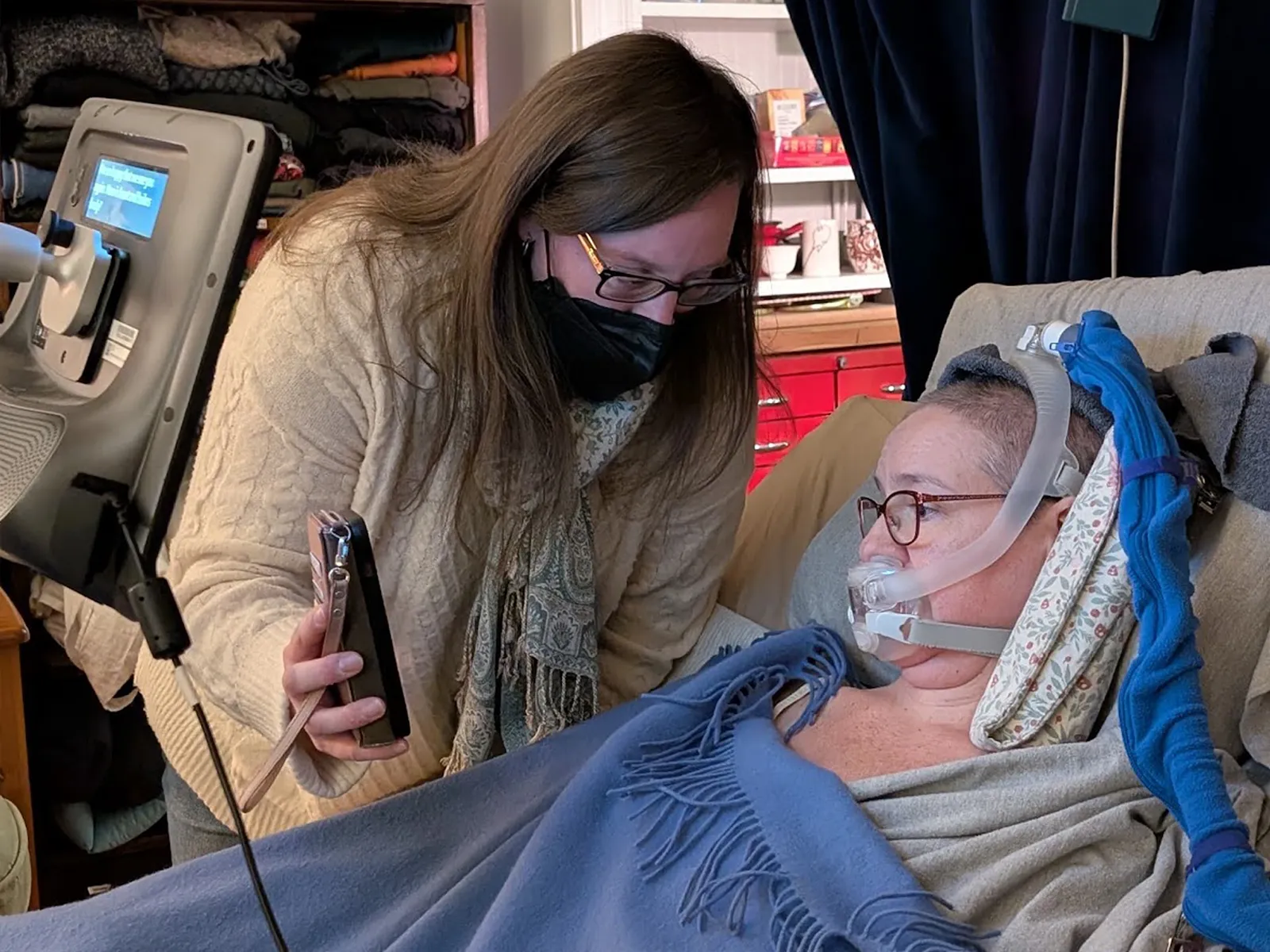
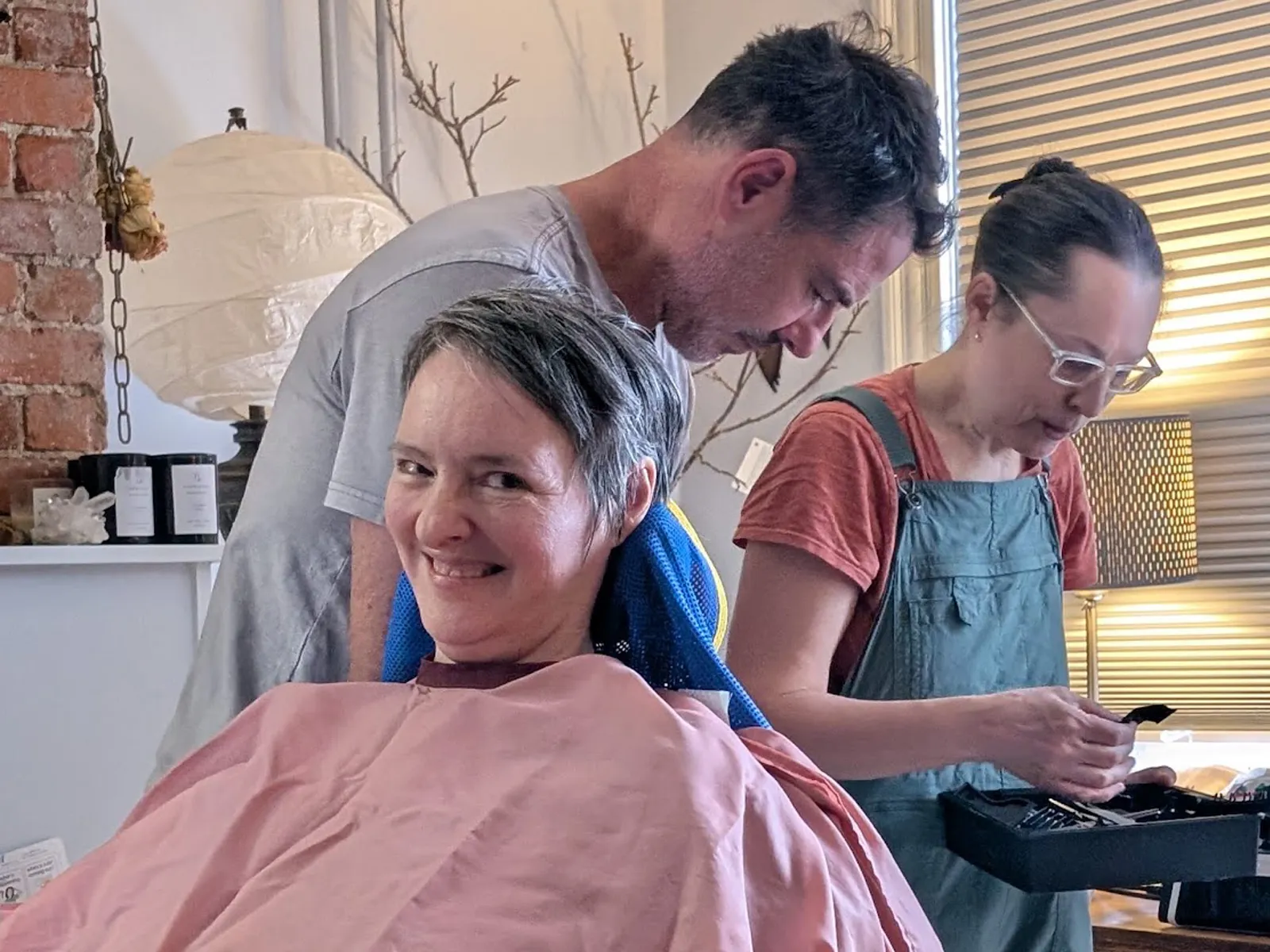
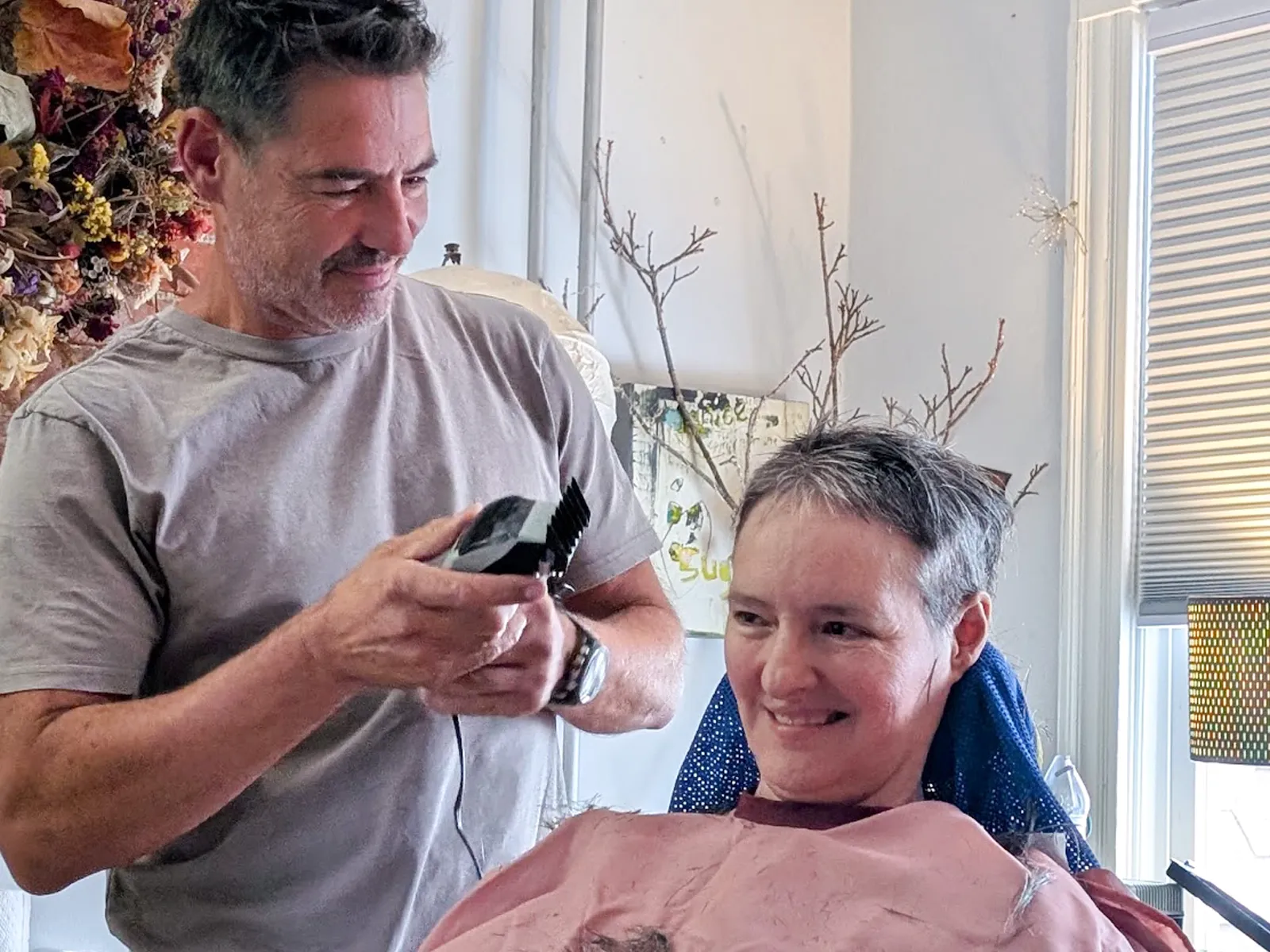
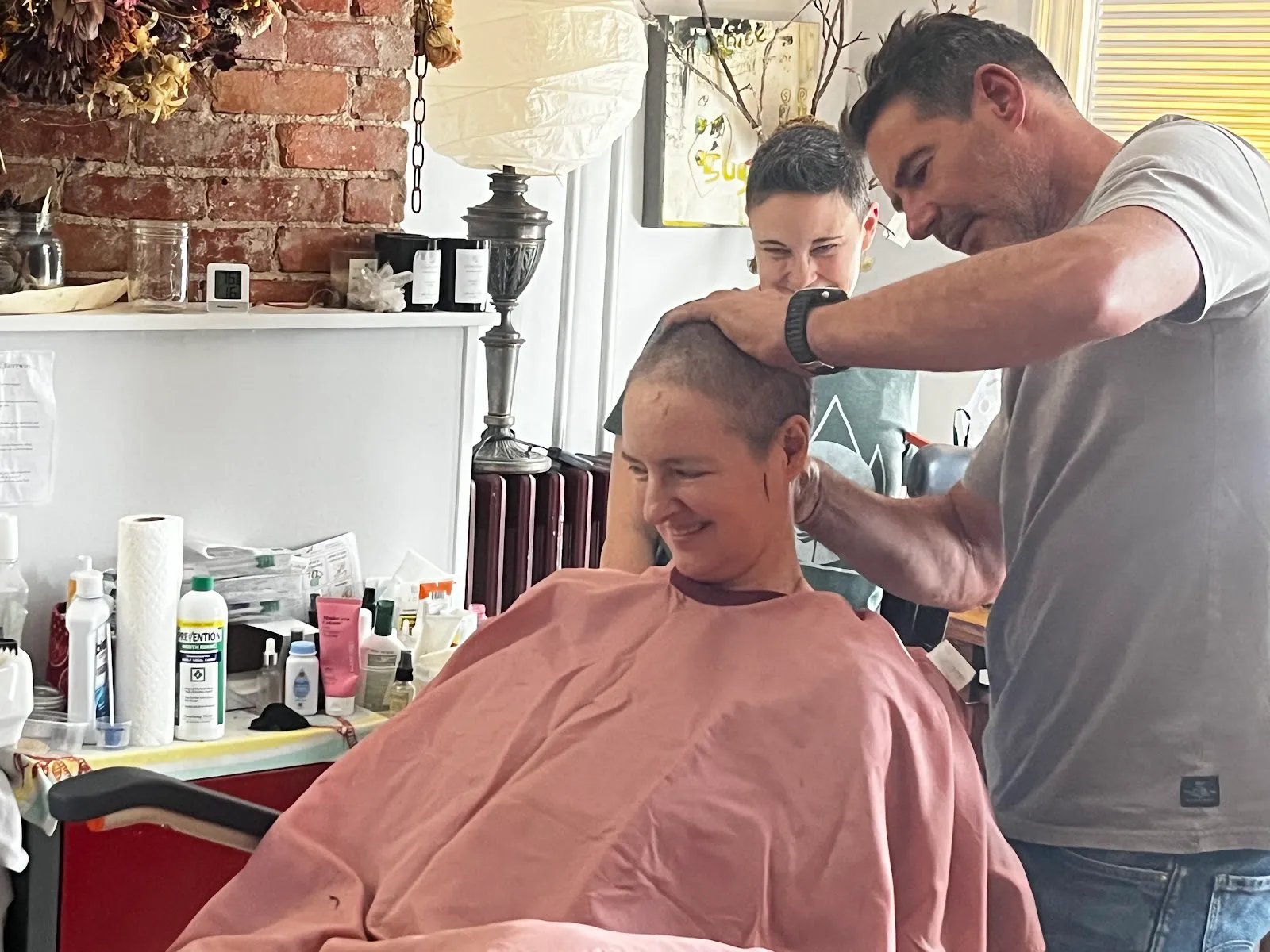
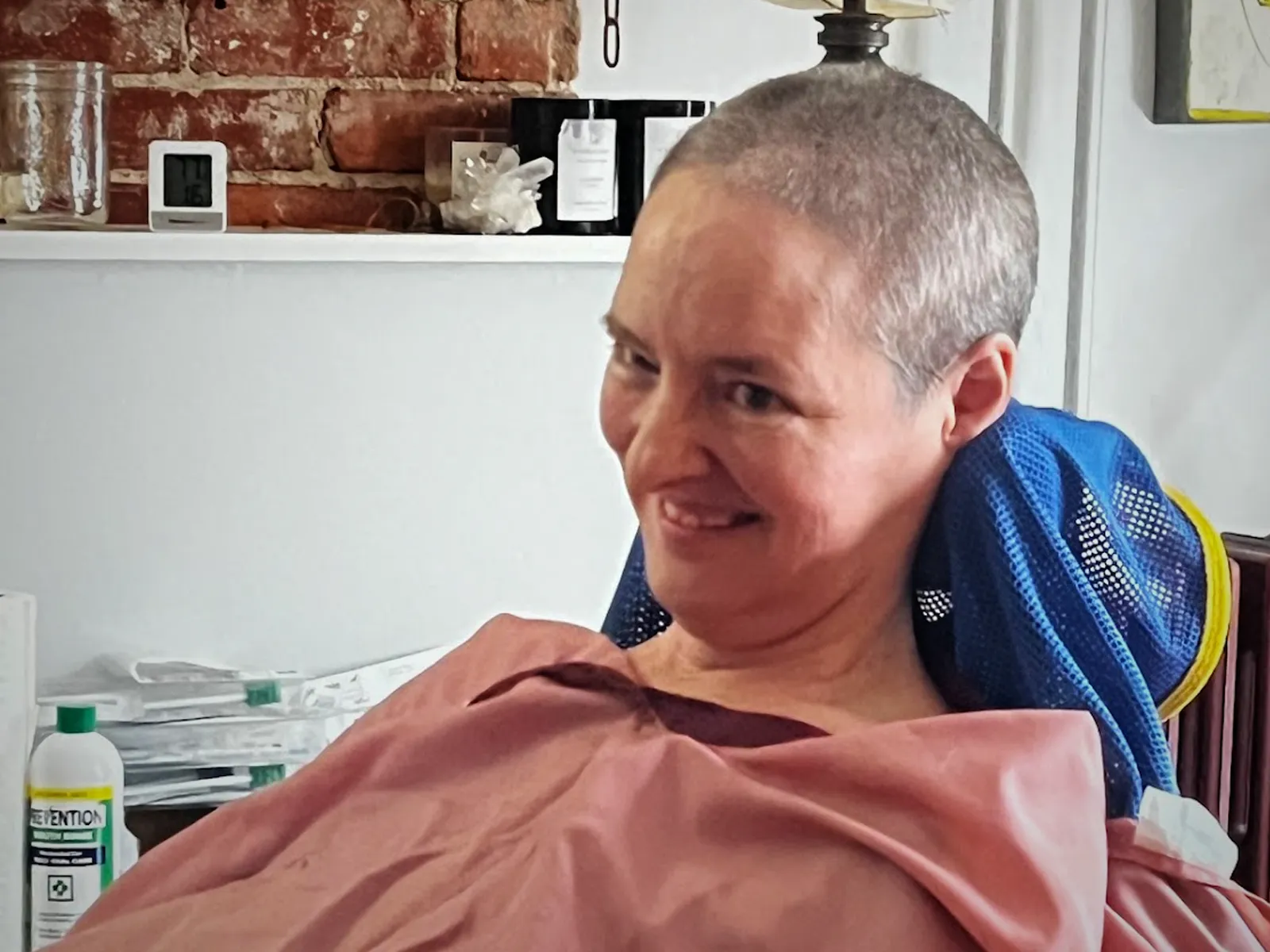
Hanna wanted a haircut
When Hanna’s brother Otto learned of her decision, he was on a plane from South Africa to Pittsburgh within hours. Otto brought his tender strength and clear presence to everything that happened through the following days, making a bridge for Hanna back to her family and the place that shaped her. As part of her design for her last day, Hanna had written this request:
buzz cut my hair off as a ritual of shedding, keep hair.
When the time for the buzz cut arrived, Otto did the honors.
Her hair became an ingredient in “Hanna To-Go Bags,” later buried by friends and family in Hanna’s favorite places on two continents.
Time for a shower
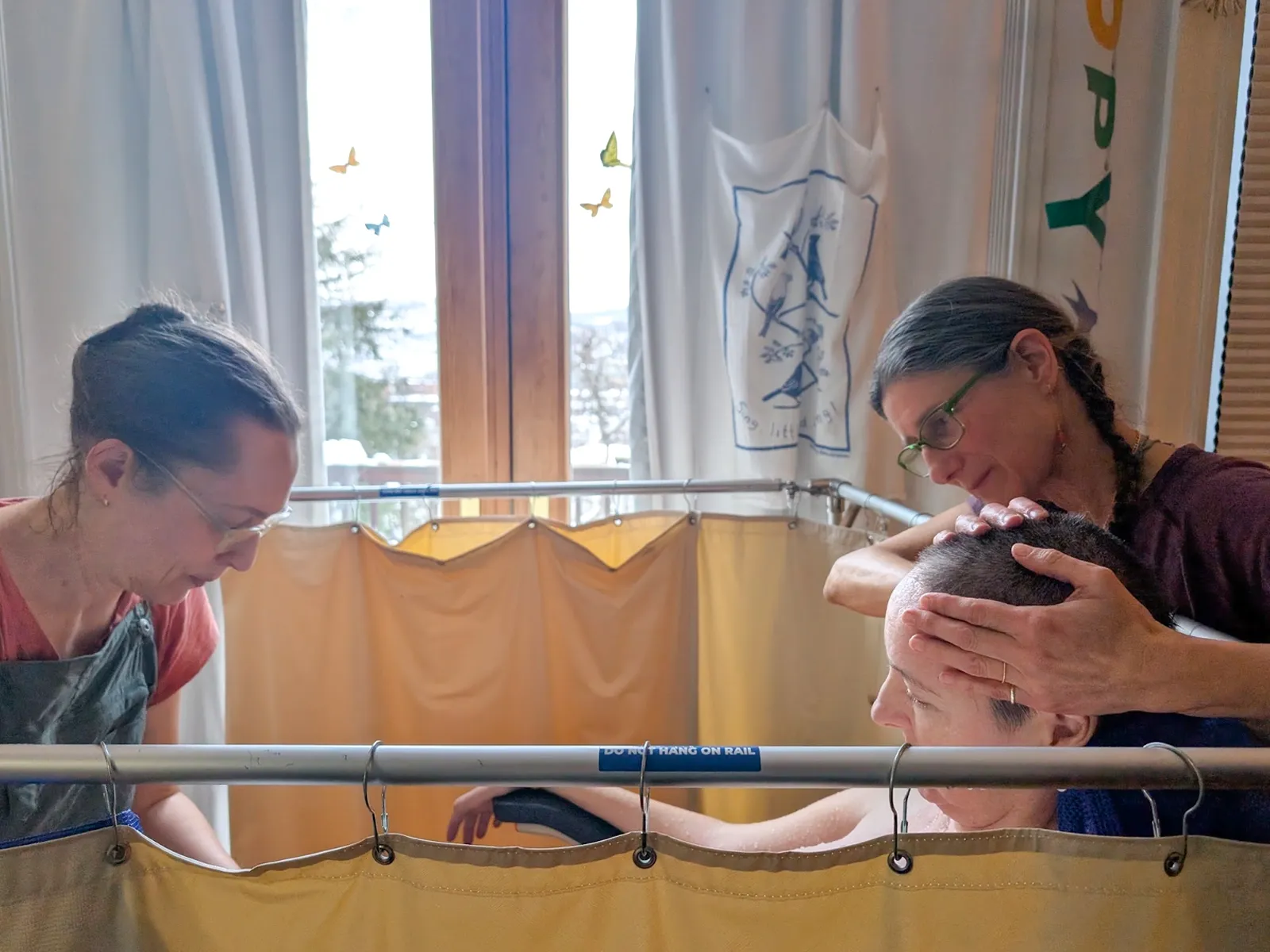
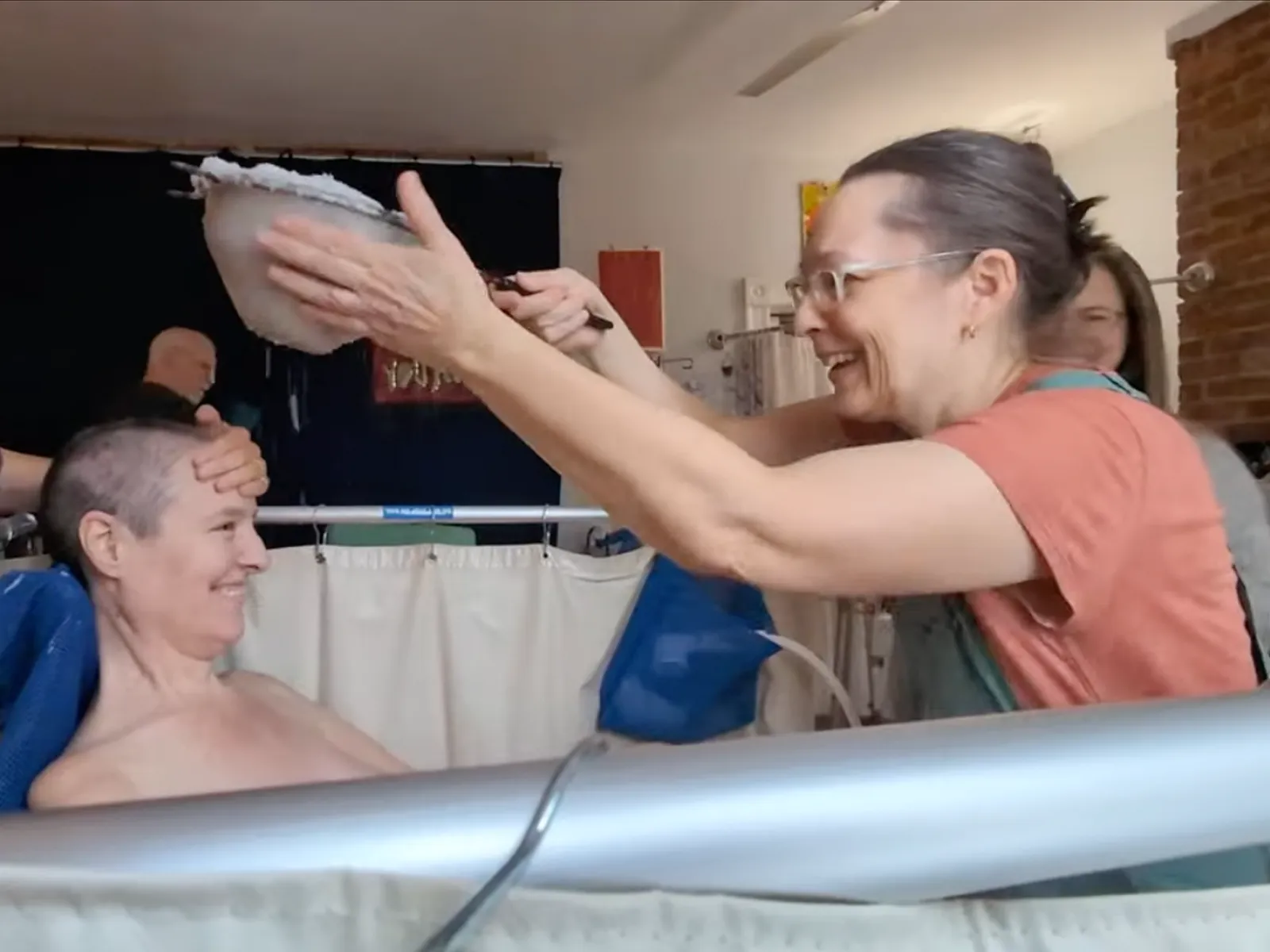
For Hanna, a shower meant sitting on a shower chair in the foldable canvas shower stall. We set it up in the living room with a view of the snowy landscape. After her warm shower, Hanna always asked to have a last good spray with the coldest water. On this day, Claude did something wonderful. She fetched a strainer from the kitchen, used it to gather fresh snow from the deck, and gave Hanna a thorough sprinkling snowfall all across her body after her shower.
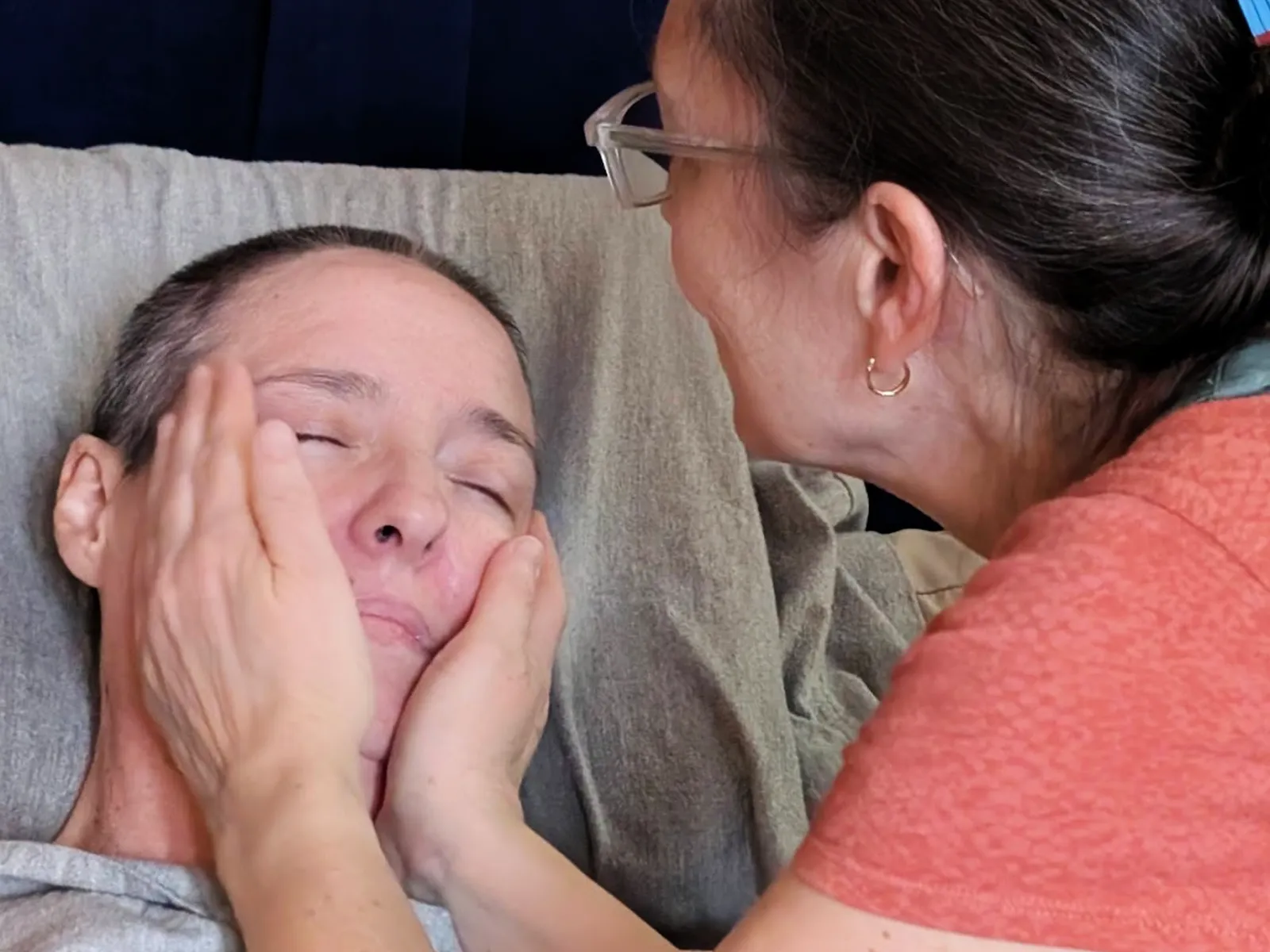
Then, as always, Hanna was moved to the bed to be toweled dry and rubbed with body lotion.
Day stretched into evening, into night, until it was time
As evening arrived, the group became smaller. Hanna took time for tender last one-on-one conversations with a few people. Conversation and care, music and musings, practicalities and poetry, laughter and tears carried us all until suddenly it was after ten at night.
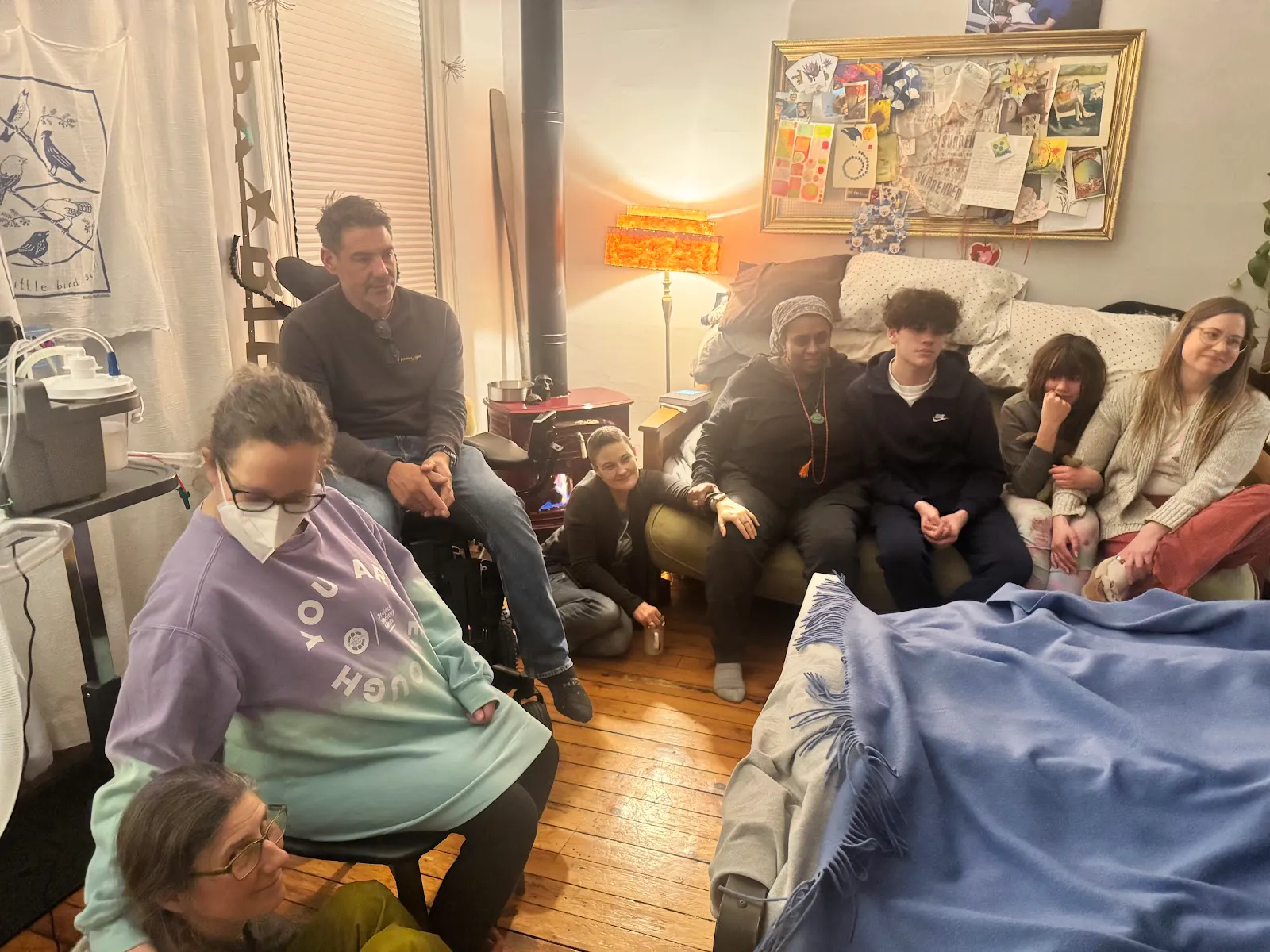
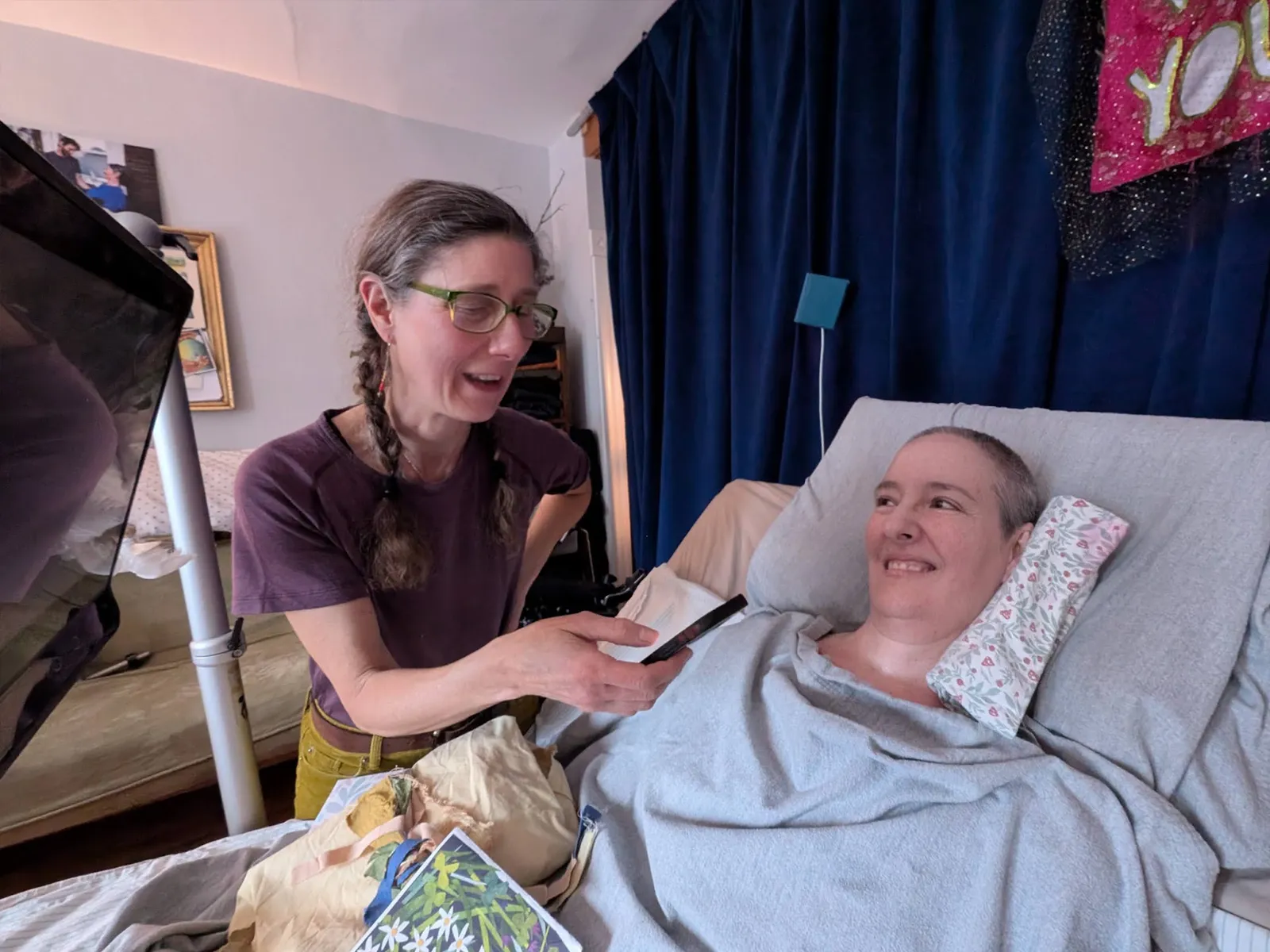
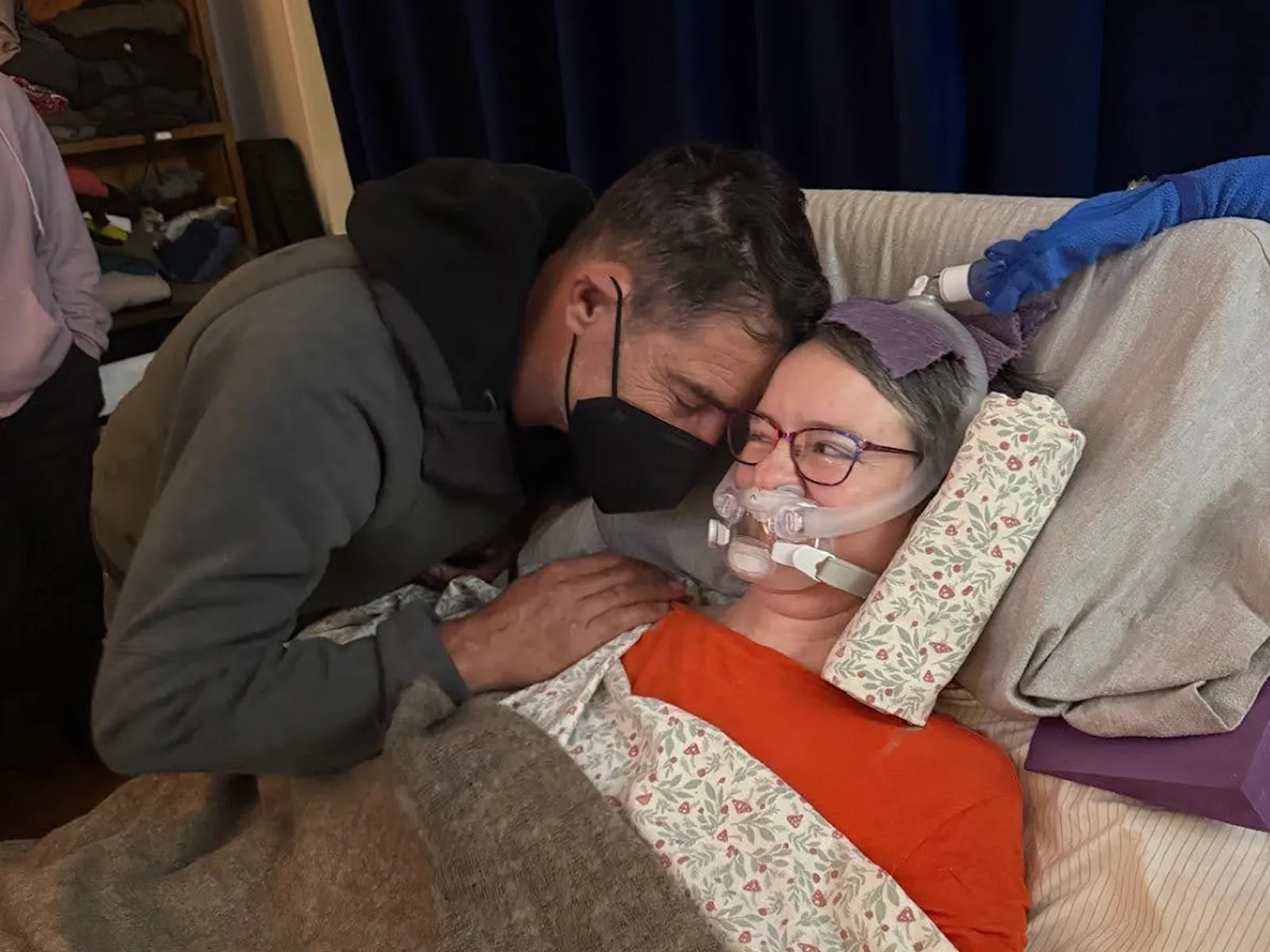
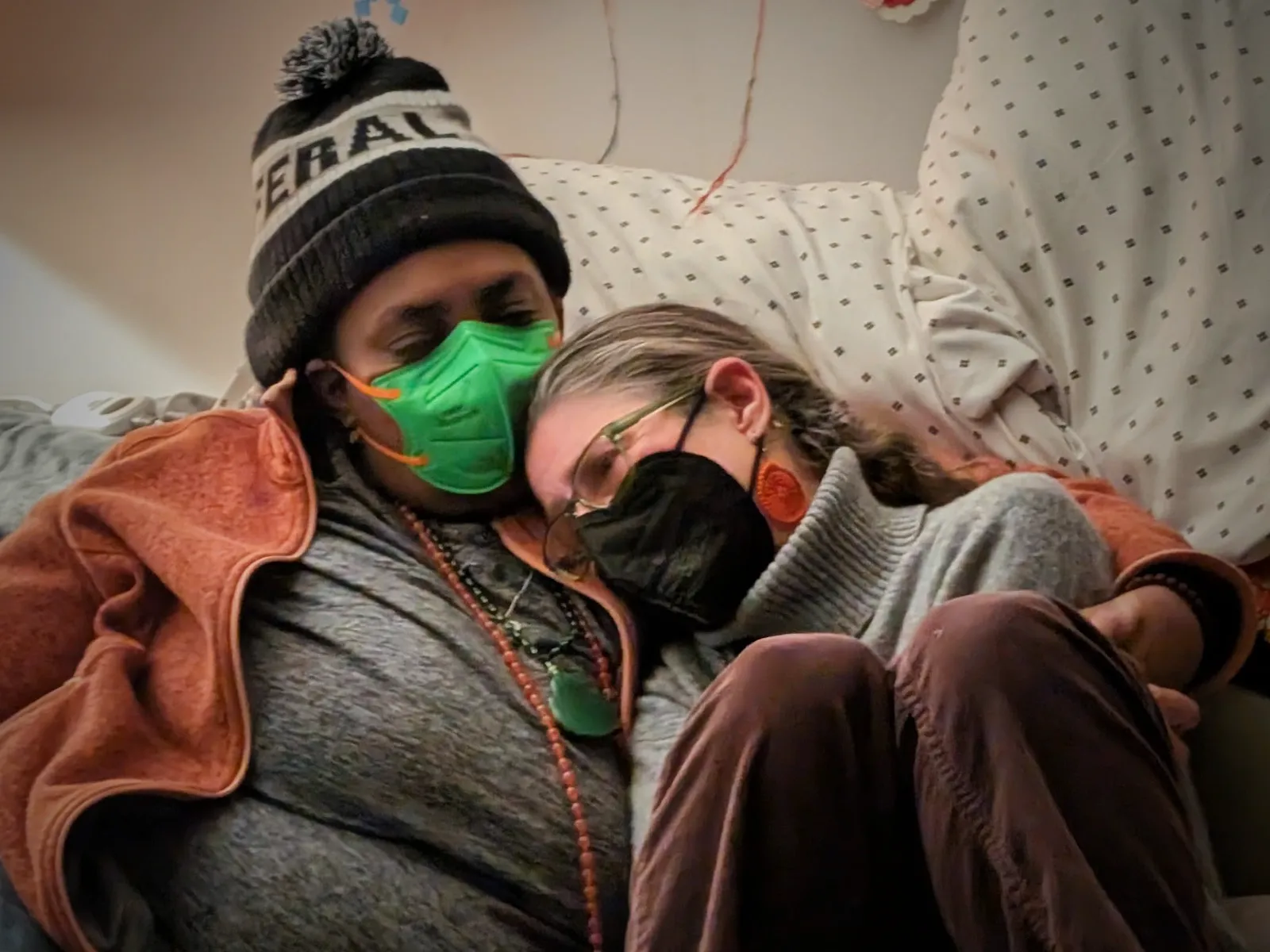
Lizzie leaned close and asked, “Hanna, are you ready for your comfort meds? It means you will go to sleep.”
Hanna nodded.
The moment was accompanied by song. People holding hands around Hanna. I forget which songs we sang. “Most Beautiful Sky” might have been one.
The vigil began.
We had set up a private Zoom feed so family in South Africa could be included.
At the School of Visual Arts where Hanna taught for twelve years, students and a head of school gathered on Zoom to keep vigil with us. Hanna’s teaching and presence had changed their lives.
There in the bedroom, people took turns reading to Hanna, and to everyone present. Poems. Letters. Posts from the message board. So many people letting Hanna know how she had touched their lives.
Thank you for showing what’s possible when we share love, vulnerability, and kindness.
Thank you for all the ways you taught us to cultivate our Selves and each other.
I am a better, more patient, more sturdy person because of you.
And so on. And on.
Hanna's li-lo
A year or two earlier, Hanna had quipped:
I want to go out on a li-lo.
“Li-lo” is what South Africans call those bright inflatable floating pool mattresses. “I want to go out on a li-lo.”
Seth and I talked later about these moments, as Hanna was losing consciousness while listening to these messages, hearing testimony that her love had landed and taken root. This, we decided, was Hanna’s li-lo. People around her, music and song. Slowly going to sleep, floating on the words of people from across the world, read to her by people she loves. People saying, “I’m more whole because of you.” “You showed me what’s possible.” “Because you touched me, I touch others.”
January 31 – February 1: The Vigil
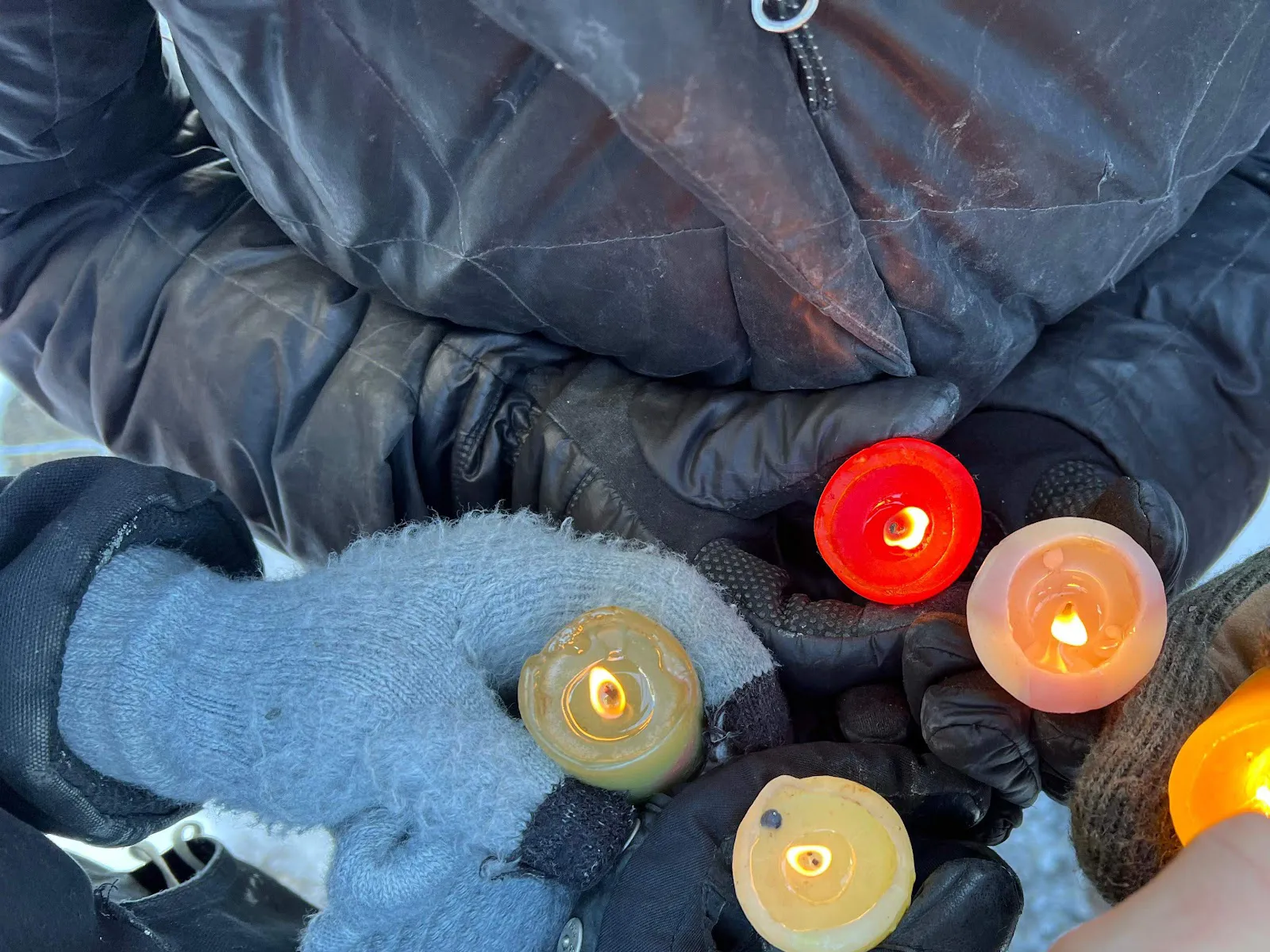
Then followed many hours of watching and waiting. Sometimes many were in the room with Hanna. Sometimes just one or two, while others slept, talked in the kitchen, played games, came and went. A group lighting candles in the snow outside the house. The Zoom link to South Africa stayed open. They could see Hanna, see us keeping watch, and we could see them.
Responsibility for hourly medications passed from person to person. Watch the clock, prepare and check the proper dose, give Hanna what she needed to sleep peacefully.
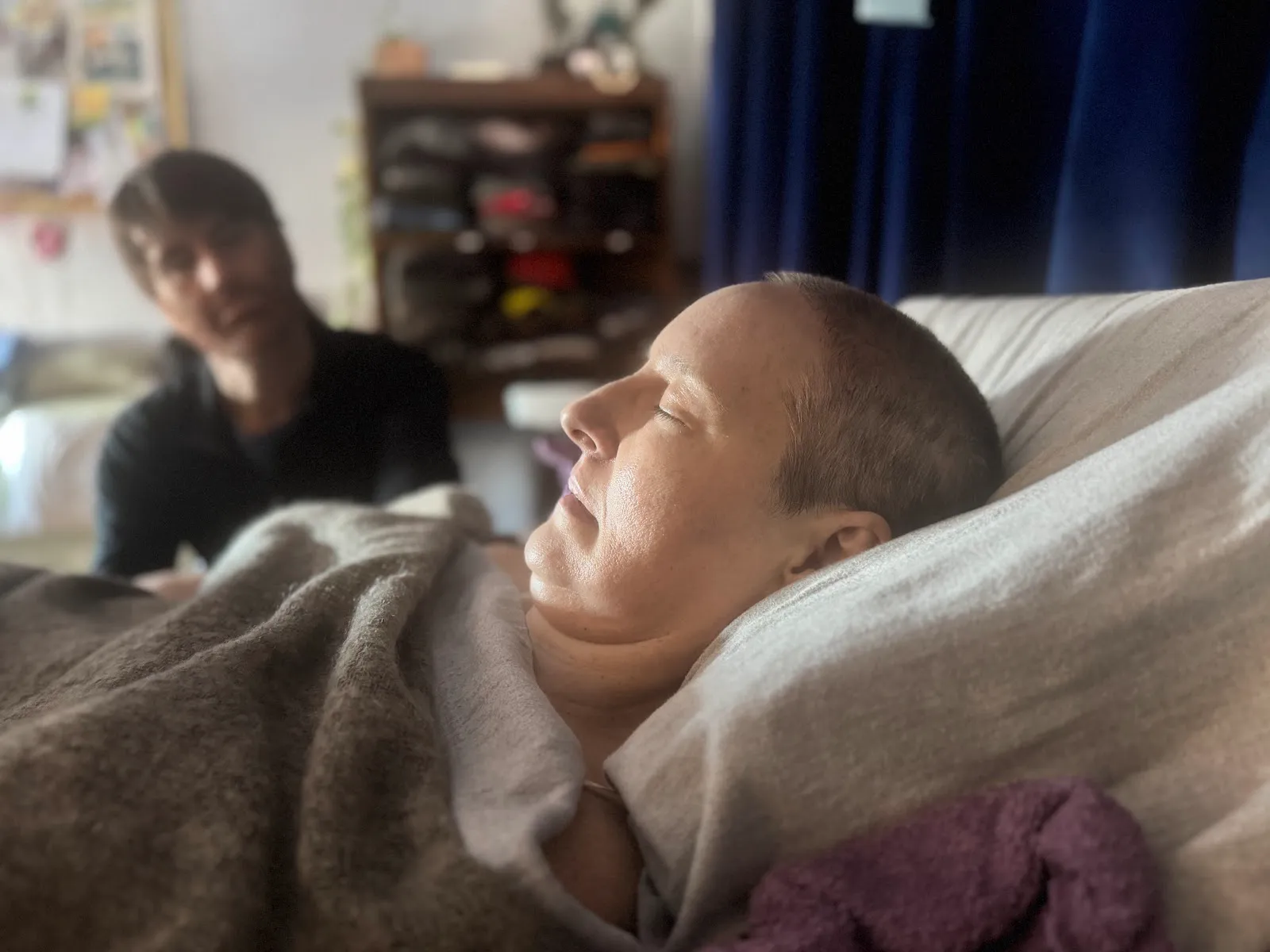
Hanna’s breathing was slow, sometimes interrupted by a sigh or a snort. We had been told to expect the process may take a long time. Perhaps even days.
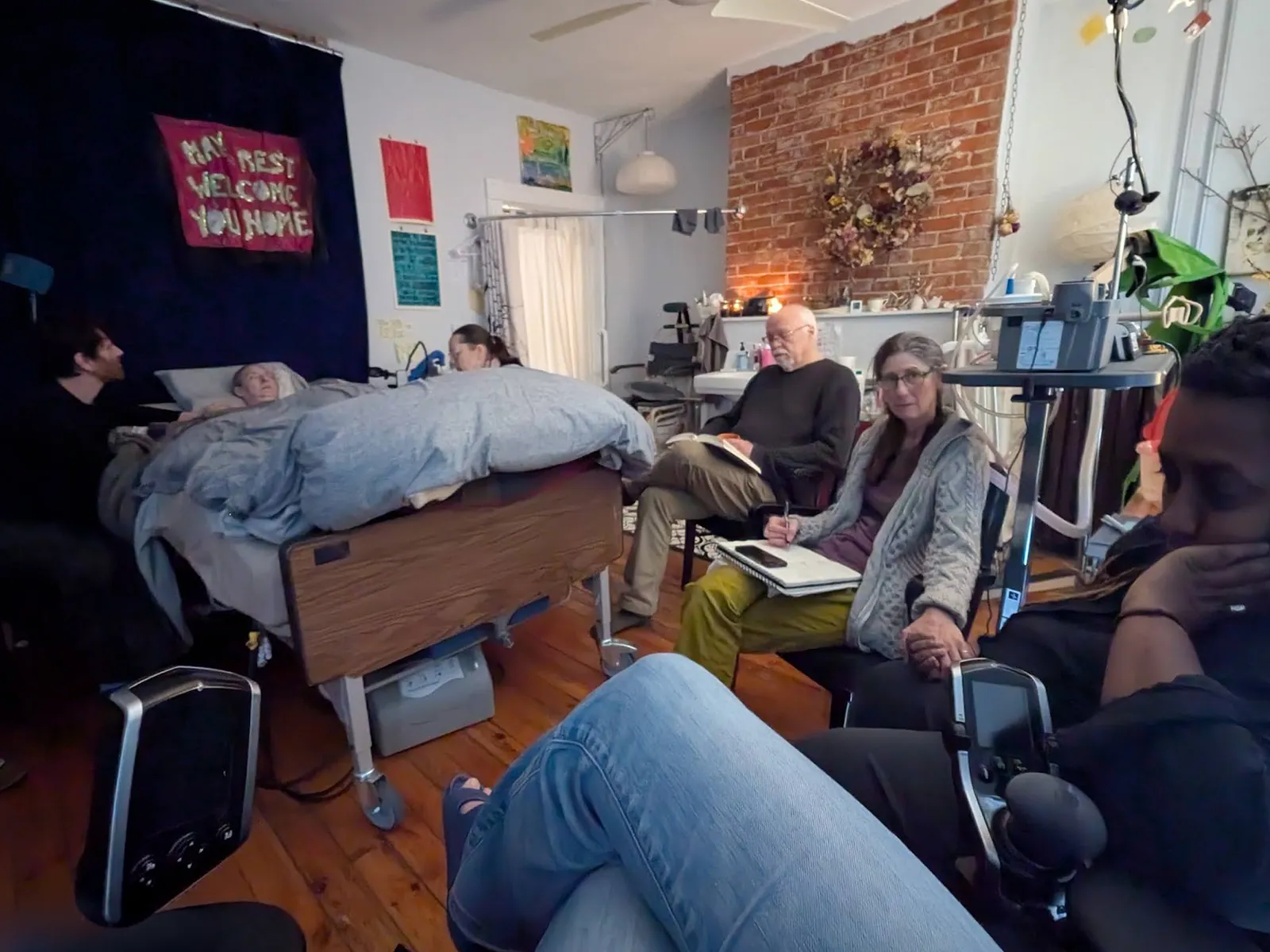
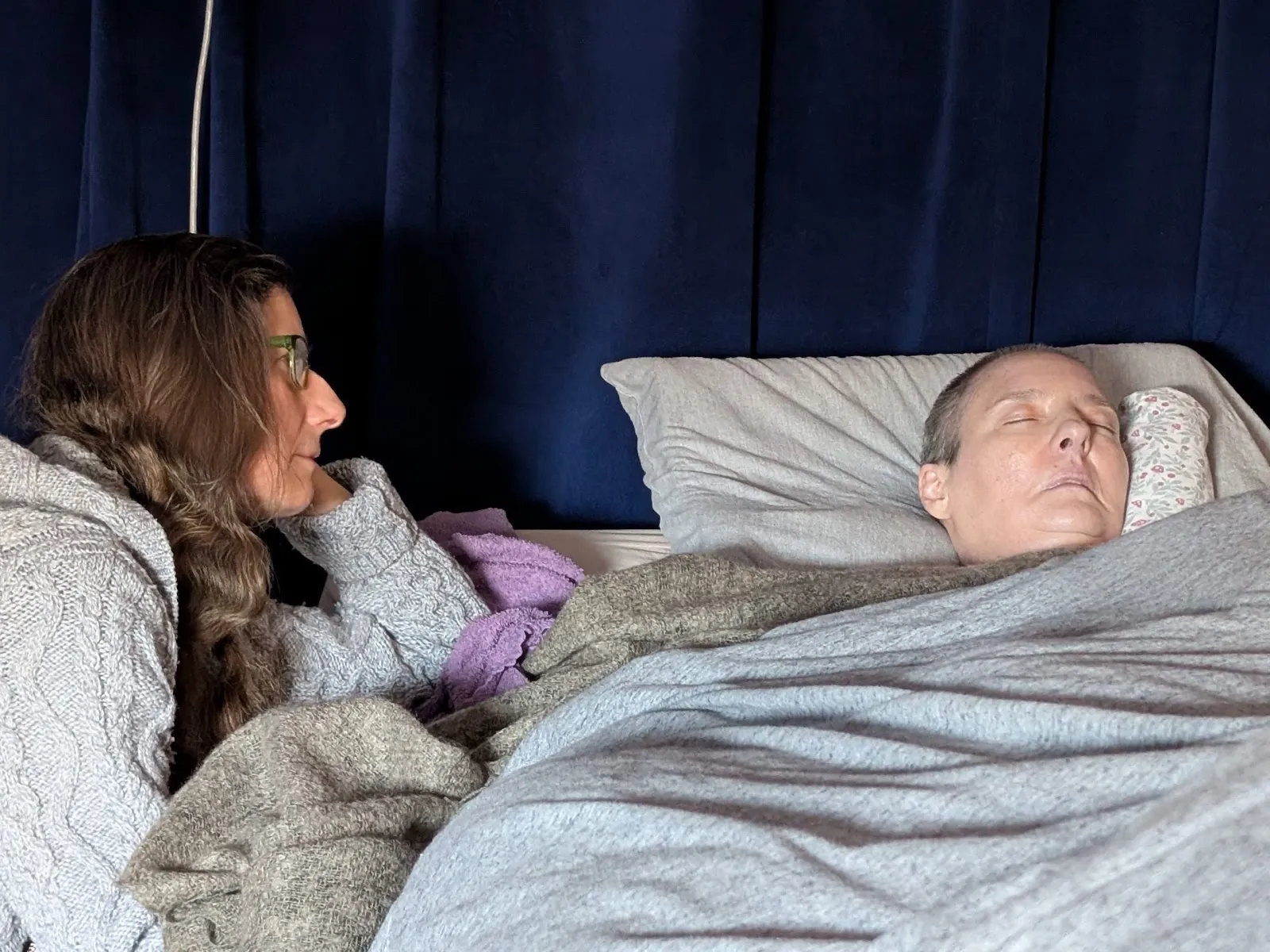
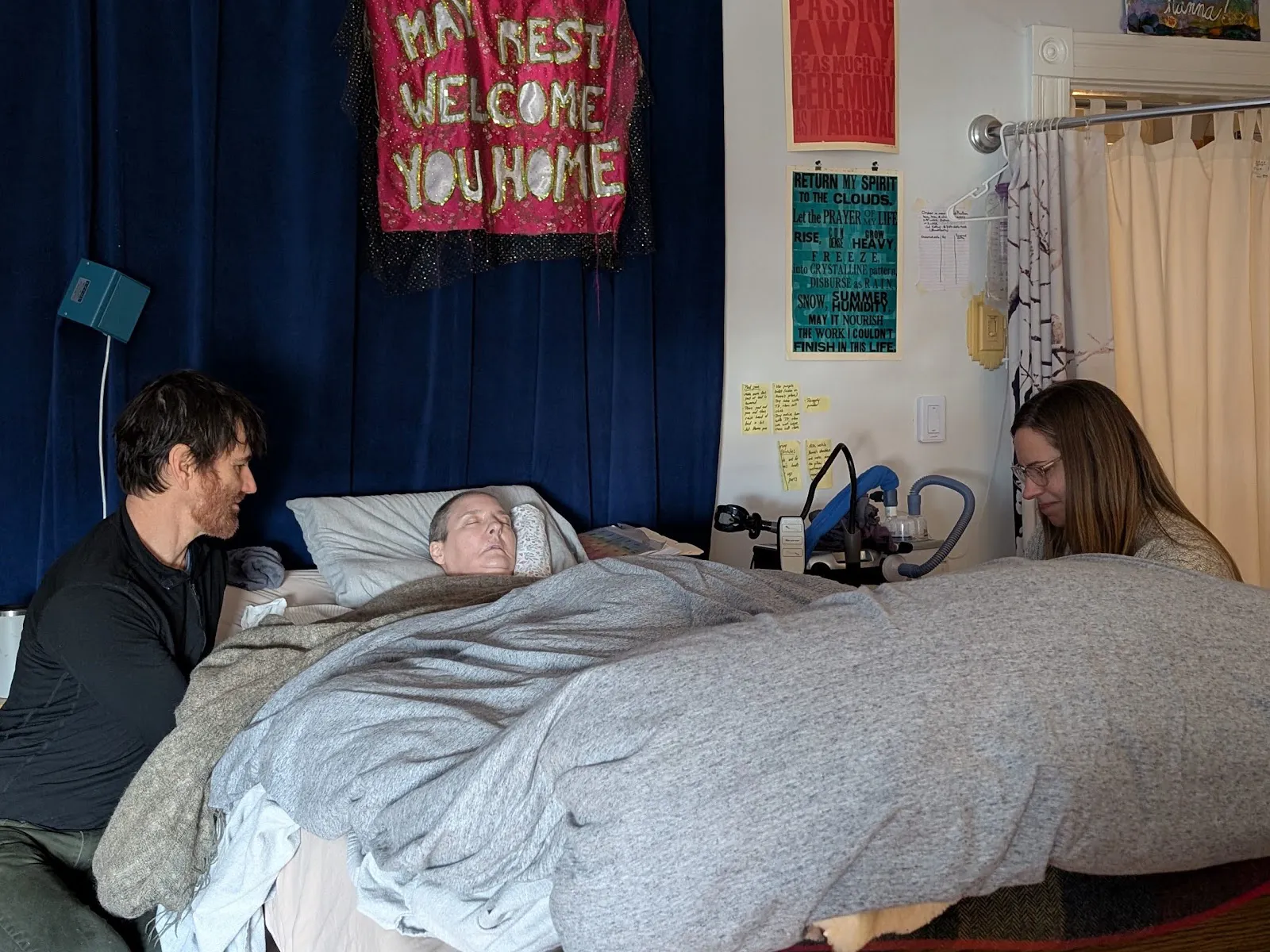
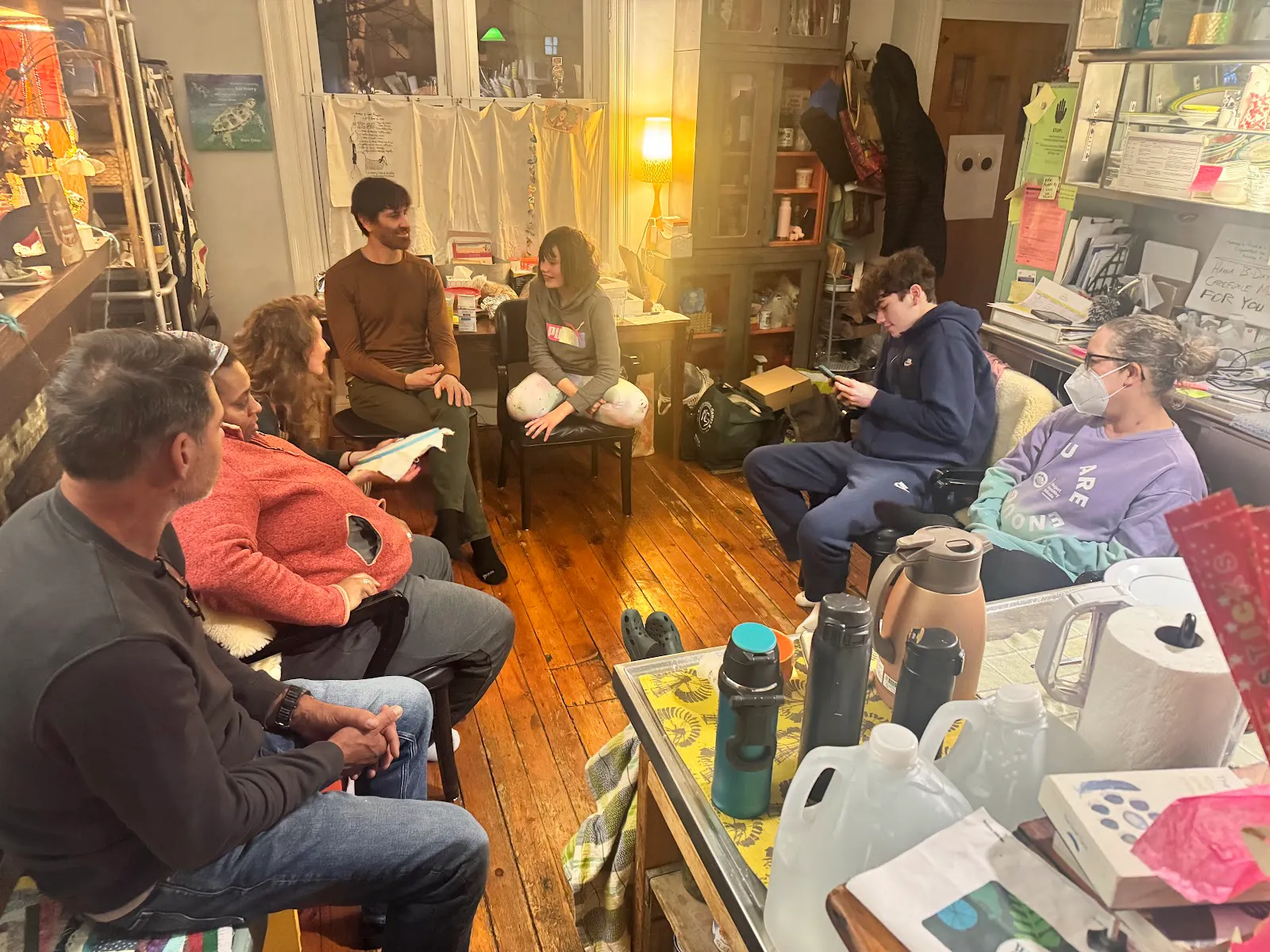
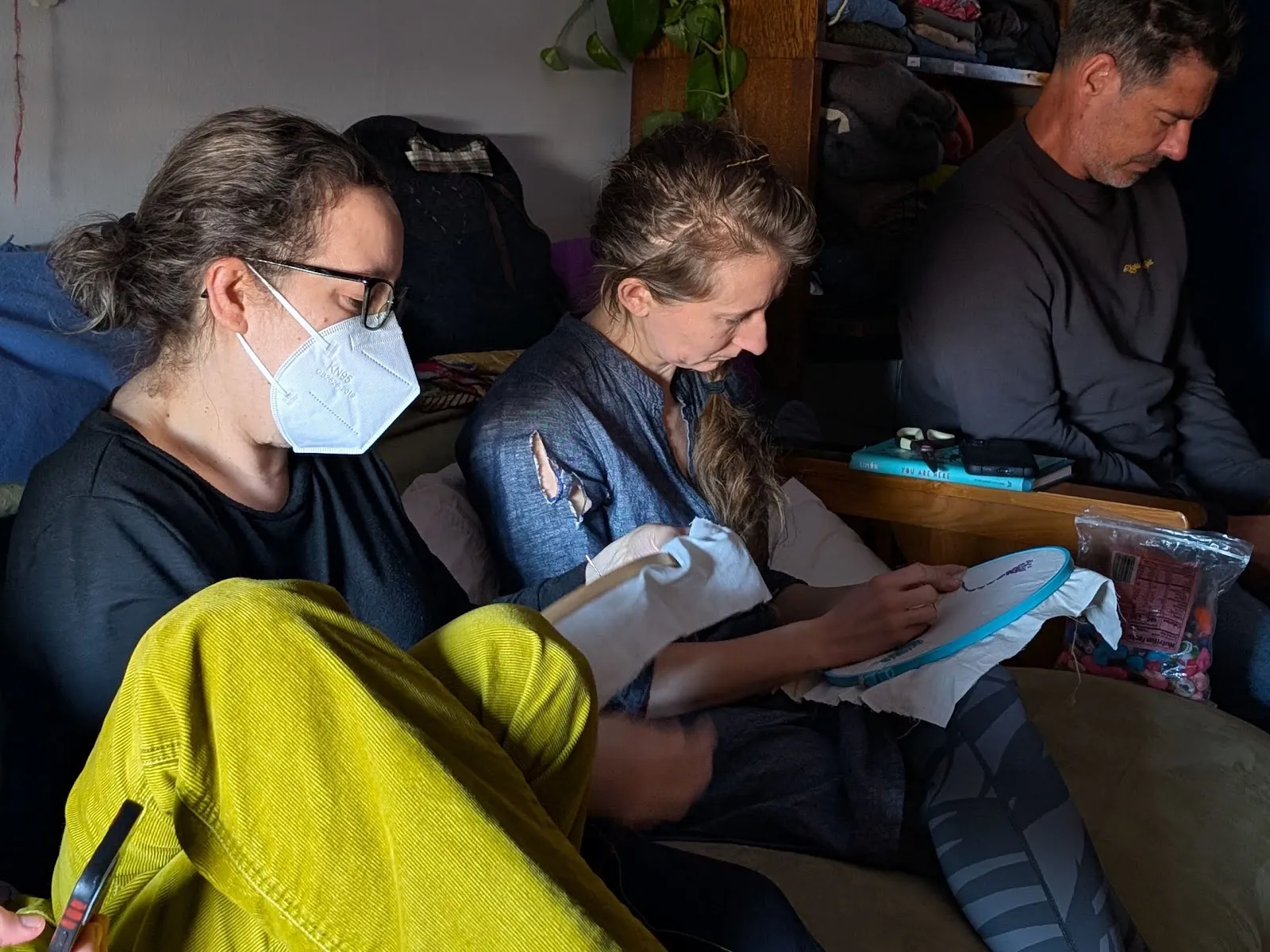
We had been using WhatsApp channels to manage everything and keep connection between the scores of people connected to Hanna’s care. The intimacy of the vigil stretched around the world.
We had been using WhatsApp channels to manage everything and keep connection between the scores of people connected to Hanna’s care. Through these chats the intimacy of the vigil stretched around the world.
2:34AM Akie: In the quiet, in the dark, we are reading messages to Hanna from WhatsApp and from the message board. Her eyes are closed. Sometimes she smiles at a familiar name, a beautiful image, or a joke.
3:23AM Lizzie: I’m going home, dears. Get some rest. Hanna is <heart emoji>
7:14AM Akie: We just came downstairs after resting for a couple of hours. Hanna’s color has changed, and her oxygen was down to 60% at last check. Ti and Marin and Michelle and I are with her. She looks peaceful.
8:48AM Ti: Oxygen around 40% now loves. No significant breathing changes. Lizzie is reading poetry.
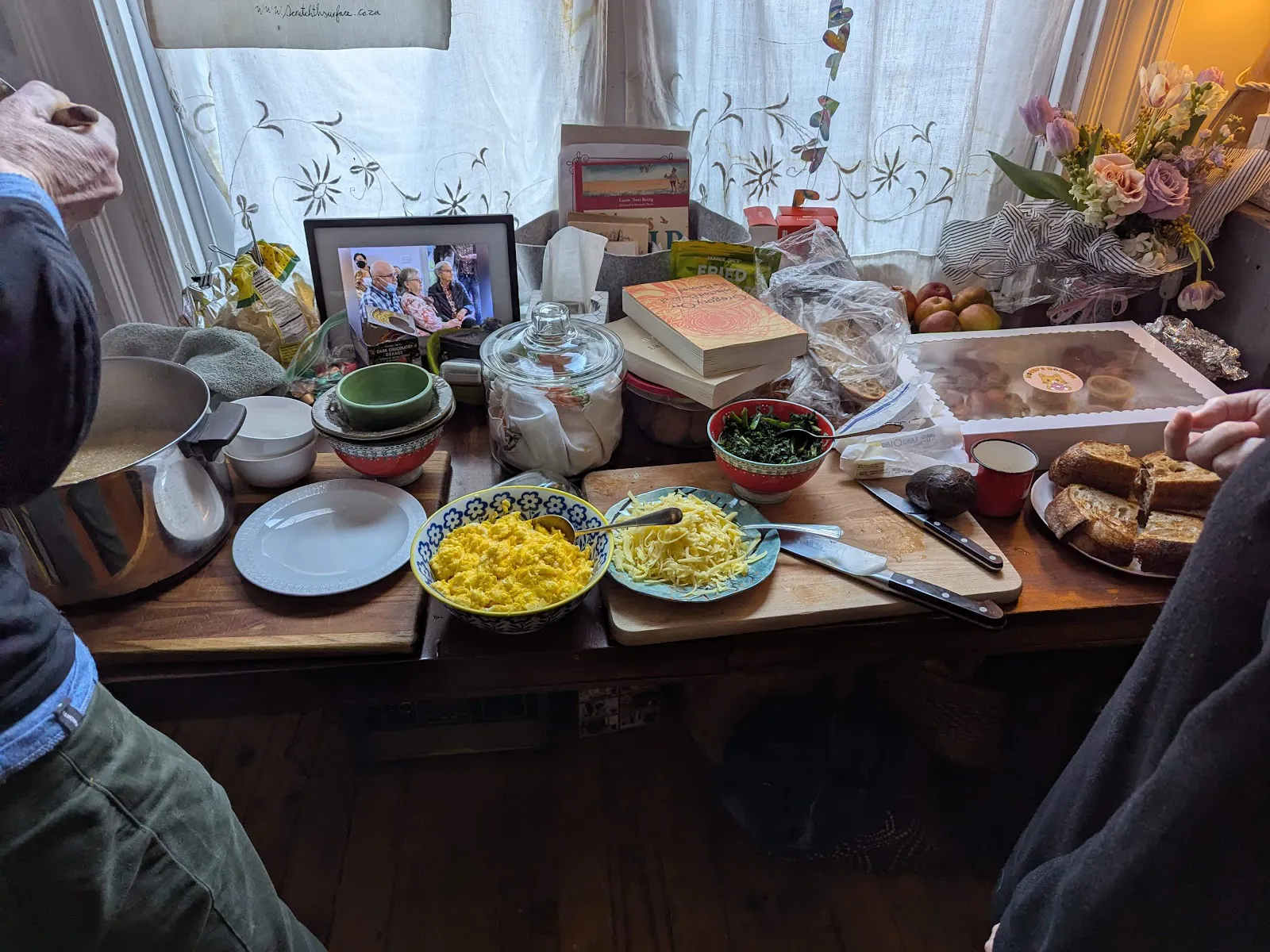
12:27PM Ti: The pauses between short series of breaths is long now. Michelle and “old Otto” made amazing nourishment – grits, eggs, toast more. We move in and out of the room.
1:47PM Goldie: Closing my eyes a bit. Please wake me if, when.
3:18PM Ti: All has been quiet for several hours. Ever longer pauses between bouts of breathing. And yet her still-young body continues a bit longer.
4:25PM Ti and Akie requesting pudding delivery upstairs STAT.
5:45PM Akie: Polish Hill. Full moon rising. Come to the bridge.
5:49PM Ti: Lasagna and Vietnamese food coming soon.7:21PM Claude: Curious, any change at the moment?
7:21PM Lizzie: Not that we can tell!
7:25PM Michelle: On my way back.
9:05PM Akie: We are all still here. Under the same moon. Getting ready to shift back into night watch rhythms. Tagging in, tagging out. Hanna, silvery sleeping swimmer in the heart of the house, goes under, holds her breath long and longer, then comes up for air and breathes on the shallow surface. Sometimes with a room of singing voices, sometimes with a single silent witness as ordinary life and extraordinary together time go on behind the blue curtain. Seth reminded us of her love of water: her ocean-trained lungs now defying expectations and doing the work of breathing Hanna, unaided by machines. Patience. As Lizzie says: No clock watching (an aspiration), in this holy, ordinary time.
9:59PM Lizzie: Lights off soon, loving you all. Anything of note before I sleep?
10:00PM Marc: Hanna is looking and sounding the same as you left her.

Later I sat beside Hanna watching her breathe, while Seth, Michelle, Early and the two Ottos (Hanna’s brother and Seth’s son) played a game in the kitchen. Ti and the two Erikas were upstairs in the spare bedroom. Hanna was breathing as she had been all day—slow and shallow, with a startling amount of time between breaths. We had become accustomed to that rhythm, the swimmer disappearing under the water, waiting for her to resurface. “It’s been so long. Has something happened? Surely she can’t….” Then just as we start to worry, her head breaks the surface and we hear her gasping inhale. That was Hanna’s breathing.
I was on meds duty, so at 10:30 I went into the kitchen to prepare Hanna’s next dose. Everything was carefully laid out on the counter, so it didn’t take long to draw the liquids, measure and check.
Returning to the bedroom, I paused to gaze at Hanna. No breath. She’s under the water. Dear one, I’ll wait for you to surface again.
I held two syringes in my hand, the next dose of comfortable sleep. I watched her face and throat for motion. I listened for breath. There was laughter from the kitchen. South Africans watched over Zoom. I stood there for perhaps two minutes.
This time she didn’t surface. This time she stayed in the deep.
I poked my head through the curtain into the kitchen. “Seth, could you join me for a minute?”
I don’t know what became of the syringes. They were in my hand, then they didn’t matter.
We watched Hanna. Others came into the room. “Is she…?”
“Yes,” we said. “Yes.”
It was 10:40PM, February 1, 2026.
Breathe.
Breathe.
Breathe.
The news went out:
11:53PM Lizzie: Johanna Hendrika (hensqueeze) Du Plessis, born January 17th 1977 in Cape Town, South Africa, died at approximately 10:40 pm in Pittsburgh, PA, creating the brightest part of tonight’s snow moon, on Imbolc, the beginning of spring, February 1st, 2026 – during the only moment the many who have been surrounding her in person since yesterday’s transition began had all stepped away to play a silly game, or sleep or bathe, while countless surrounded her and us from afar. She is luminous, she is love; we are all luminous, we are love. More soon. lovelovelovelovelovelovelove.
Poetic ritual
Two immediately start cleaning and organizing the clutter in the room. Some talked in pairs and small groups. Another stepped away for a few minutes alone.
There was a plan for this time, worked out in collaboration with Hanna. From the Death Bureau’s notes:
Immediately After Death
Wash the body. Use warm water in a bowl with drops of lavender or other aromatic oil. Gently wash the face, legs, arms, hands and feet. This is more of a ritual cleansing although it is helpful to remove any residual bacteria from the skin. Pat dry completely. Dress the body—Hanna is planning a simple white nightgown. Is there jewelry that Hanna wants to wear, and can wear for green burial?
In my memory the next hours are a blur of motion, emotion, and loving care.
Wash her body,
then oil, scent of lavender.
Cloth to close her mouth
shapes a sweet expression.
Tender hands
that wash and oil and tie.
One who felt afraid
to touch her
in delicate illness
now touches freely,
hesitant hands now free.
Now turn the body,
slide on the gown
a garment prepared,
long stored
for this moment;
fabrics carry meaning—
tiny flowers
from a worn pillowcase
sheathing the shoulders,
a gift from years ago.
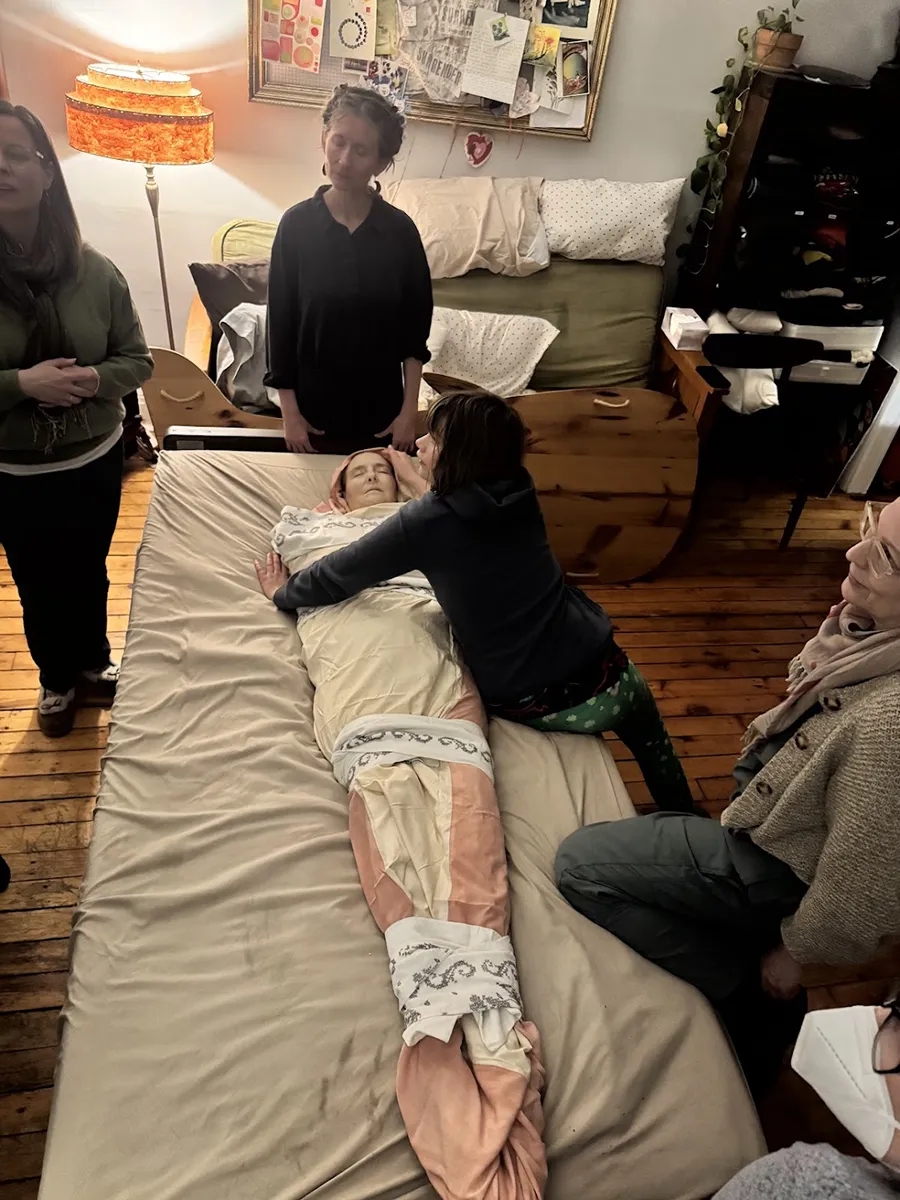
Now eight people
together
guide her
to the whale-shaped board
made by her partner
to hold her as she sinks
into these strange
waters.
And we wrap her in silk,
old Japanese silk.
She is wrapped in gifts
and resting on gifts
from those she gifted.
List complete, we retire
to bed, to rest—
our first attempt at rest
in this strange new season
without our Hanna.
The Day After
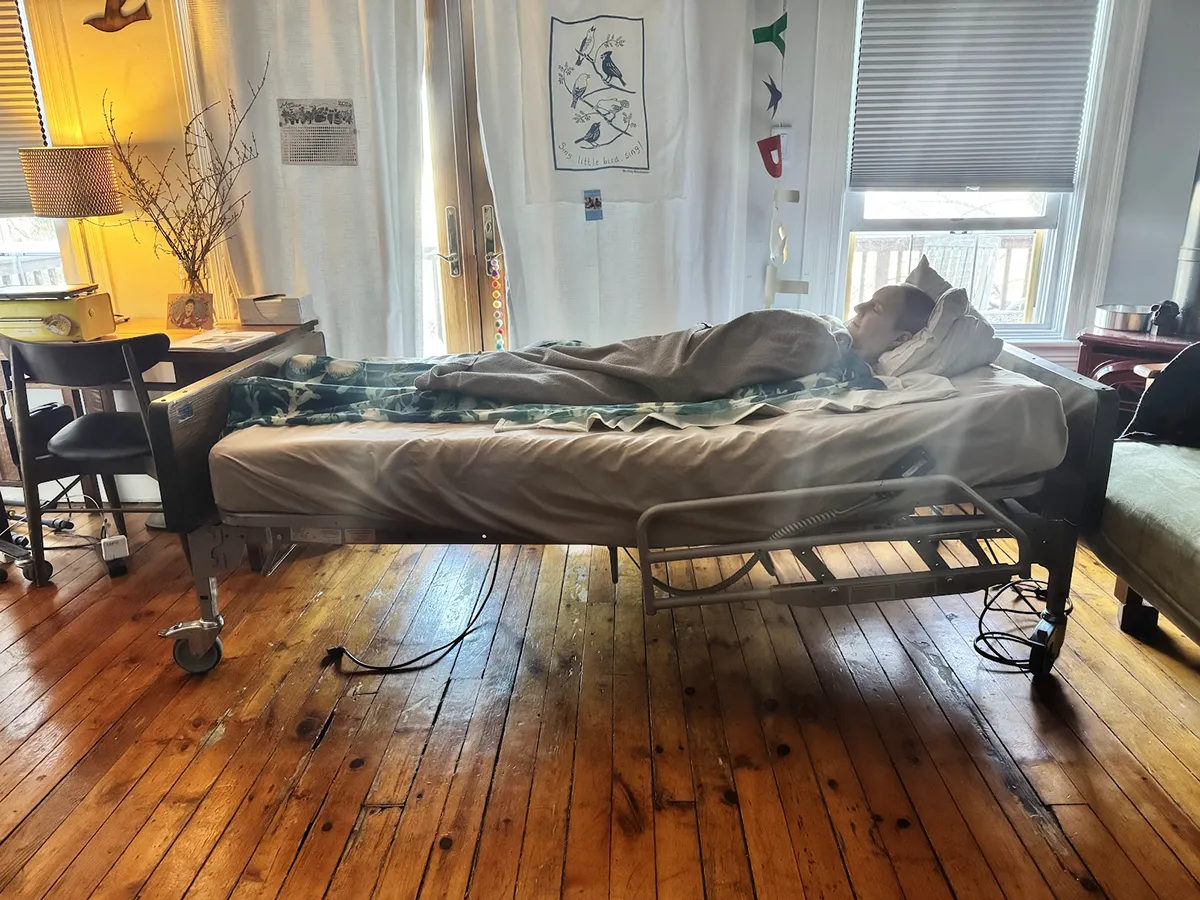
I rose early the next morning, and walked to The Oasis—Hanna’s house. Others were still sleeping. As was Hanna, in winter window light.
The morning was lazy, hypnotic, at least for me. Though there was a lot to do, and people were certainly busy doing those things—that constant reminder to feel amazed and grateful that so many psyches and personalities were involved. This death was surrounded by community, while so many navigate death alone.
The river of crows
Hanna had particular affection for crows. In Pittsburgh, often directly over our neighborhood of Polish Hill, the crows do something each Fall and Spring that is wonderful to see. Each evening around sunset, a multitude of crows flies overhead in a long wide line from east to west. They caw and cackle overhead for maybe thirty minutes, some pausing in the trees as they go. They return in the morning around sunrise, their constant stream now moving from west to east. We call this “the river of crows.”
From the death bureau’s notes:
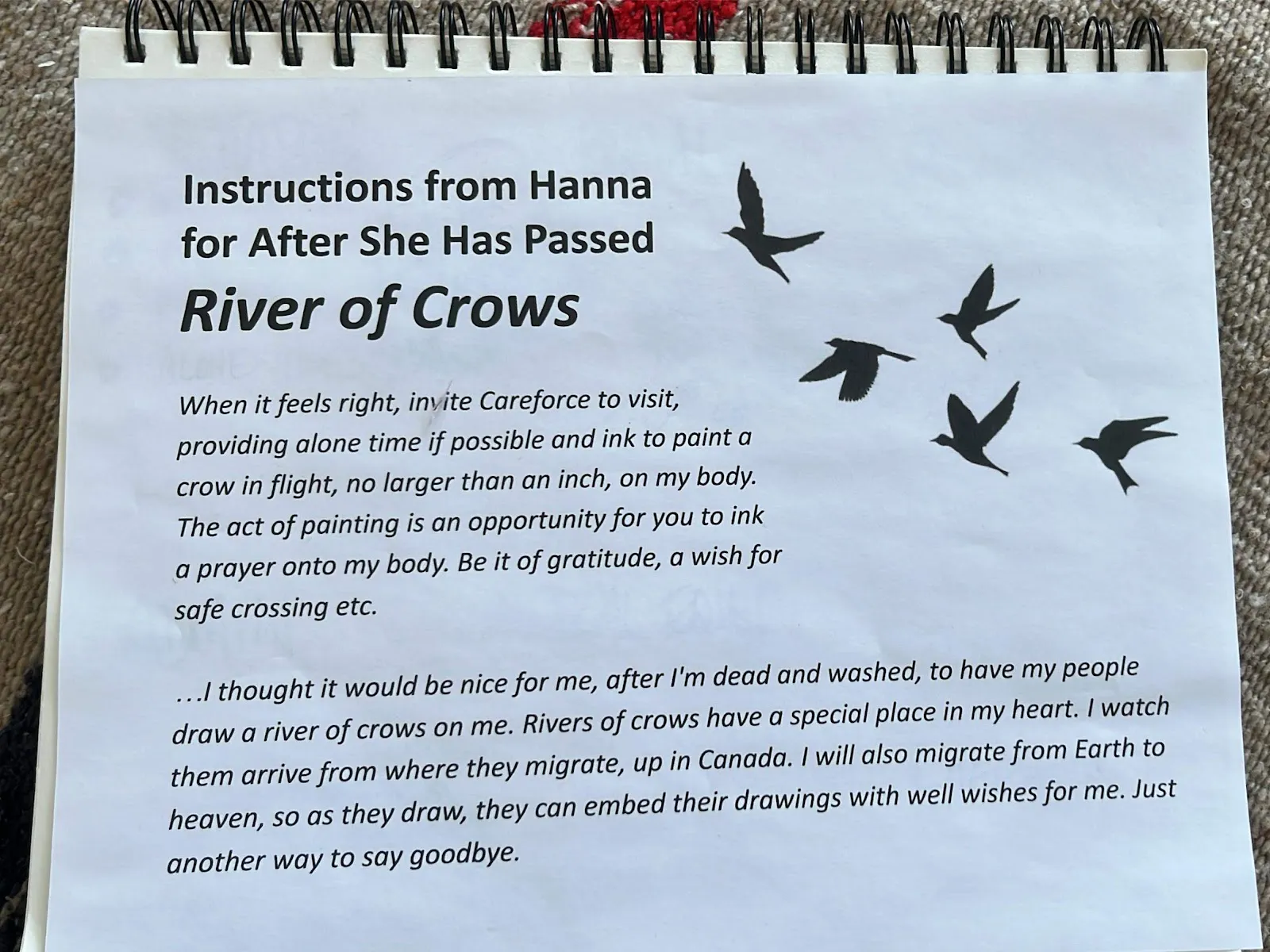
The River of Crows
Hanna wrote: “When it feels right, invite caregivers to visit, providing alone time if possible and ink to paint a crow in flight, no larger than an inch, on Hanna’s body. The act of painting is an opportunity for you to ink a prayer onto my body. Be it of gratitude, a wish for safe crossing etc. …I thought it would be nice for me after I’m dead and washed, to have my people draw a river of crows on me. Rivers of crows have a special place in my heart. I watch them arrive from where they migrate, up in Canada. I will also migrate from Earth to heaven, so as they draw, they can embed their drawings with well wishes for me. Just another way to say goodbye. Oil my body with Fijn oil. When appropriate, dress me in the night gown. If more people want to say goodbye in person, this would be the time.”
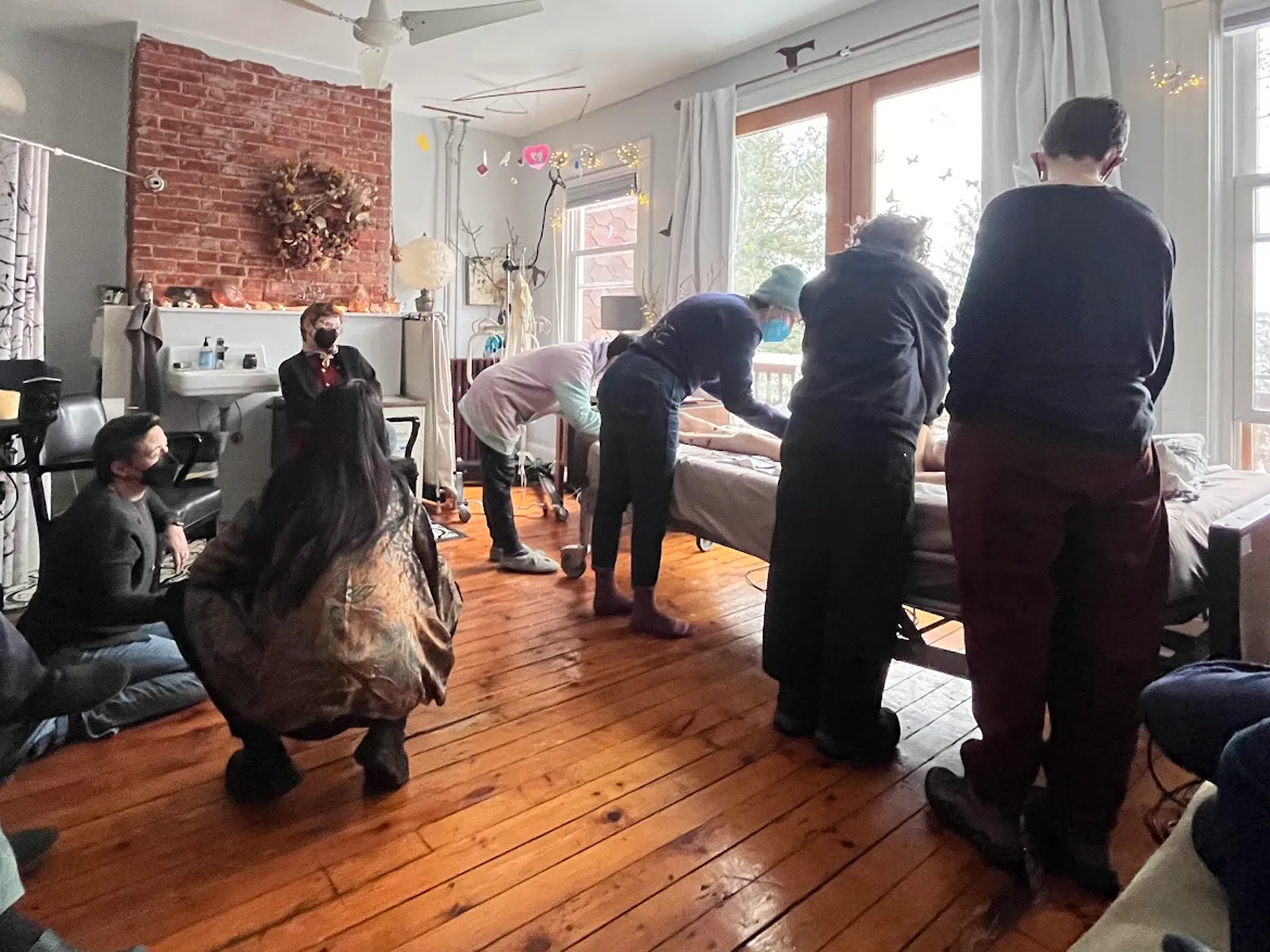
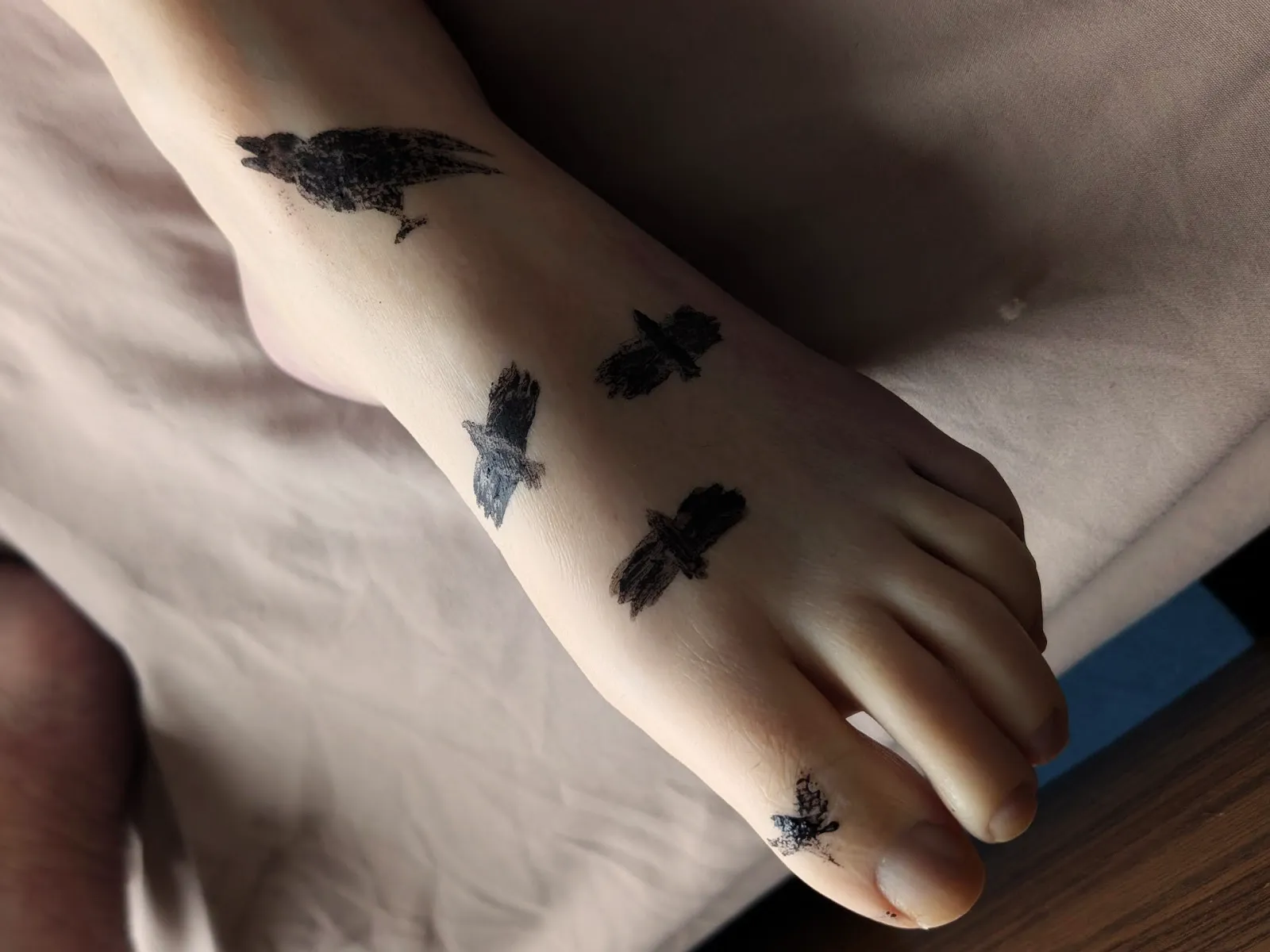
With crows painted and Hanna dressed, the evening was a time for visitors. An announcement had gone out:
Dear ones, please know you are welcome to the Oasis tonight for a visitation from 5 to 7 pm. We want to let you know that this is a home funeral, which means that Hanna’s care team has provided care and preparation for Hanna’s body. If you come, you will see Hanna’s face. You are welcome to bring flowers or absolutely nothing. Come as you are, this is not a dress up gathering. Please be mindful that the space is small. This is an intimate gathering for people on this Careforce chat. Please bring and wear a mask. We love you!
In groups, in ones and twos and threes, people spent time with Hanna. In the kitchen, we were very together.
A car arrives, glowing blue, giving us a chance to practice
Then, visitors gone, those managing the process needed to prepare for the arrival of the burial service to navigate the snow-packed streets. The Hearse arrived, its interior glowing with blue light. Hanna, lying in her silks on her whale-shaped burial board, was gently placed in the back of the car. It soon rolled over the packed snow, carrying Hanna to the next stage of her journey.
My life folded, a chapter turned in a minute—a minute spent on practical, necessary things, when what I really wanted was to wind back time and make it all unnecessary.
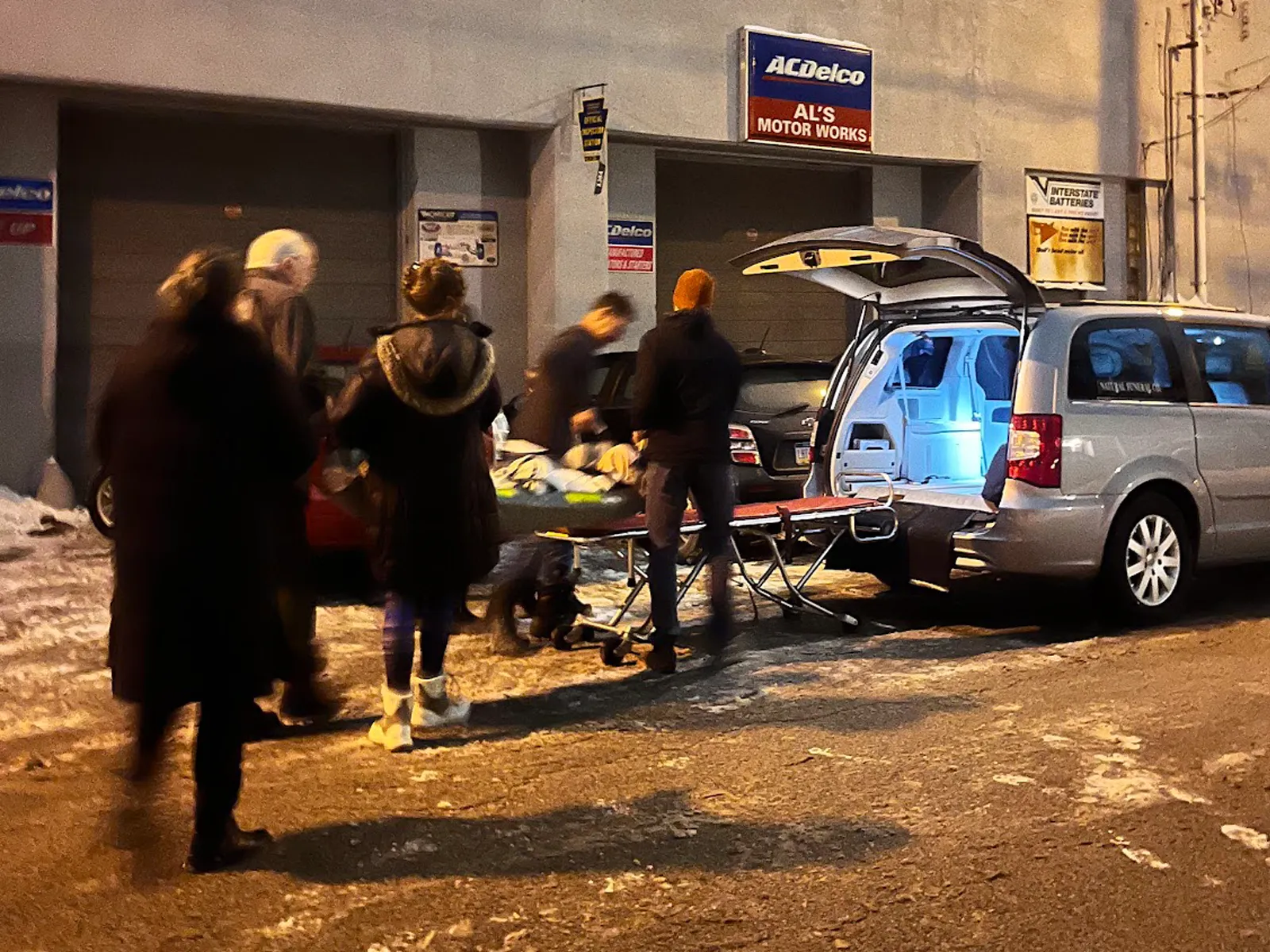
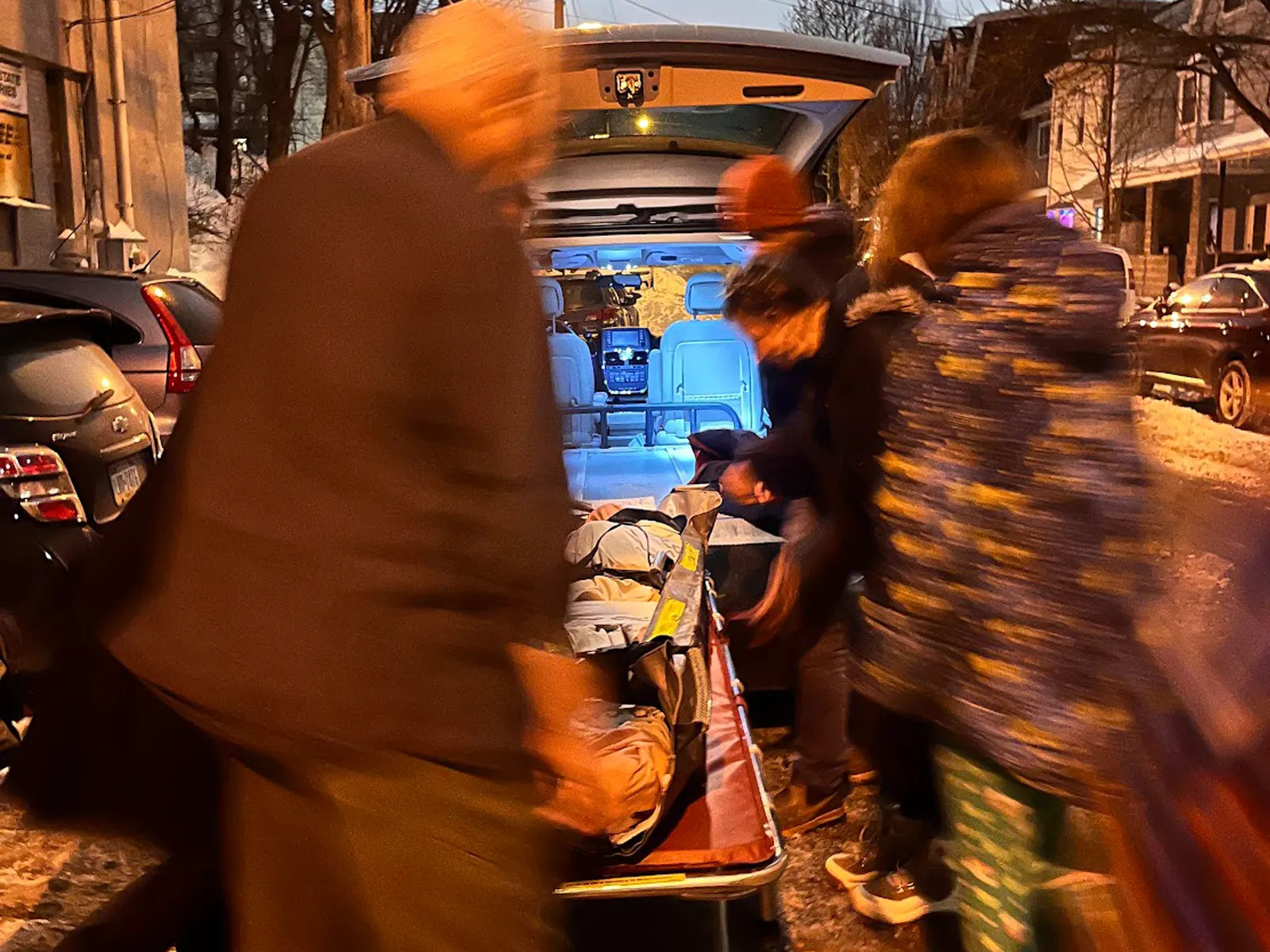
The Burial Service
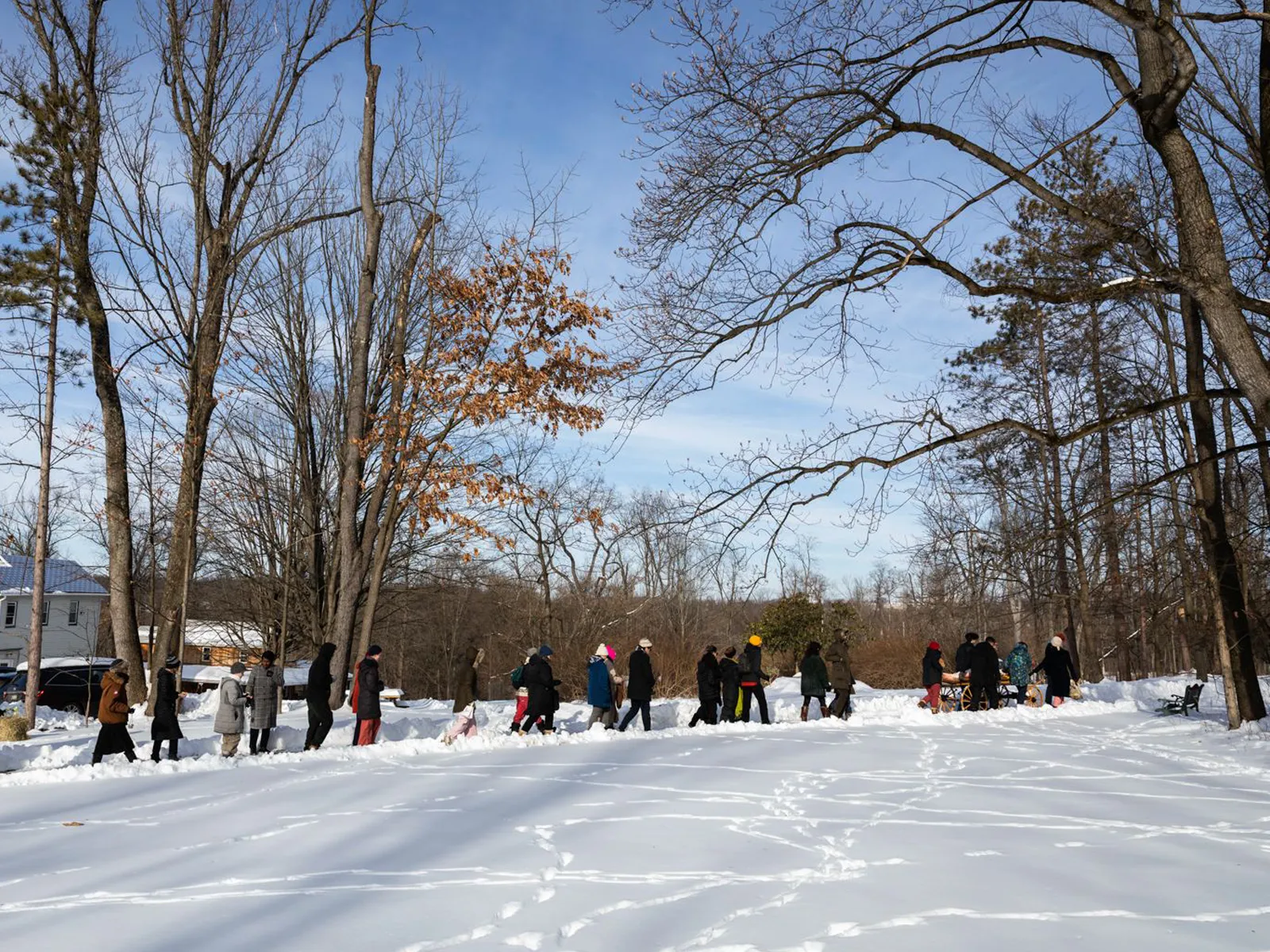
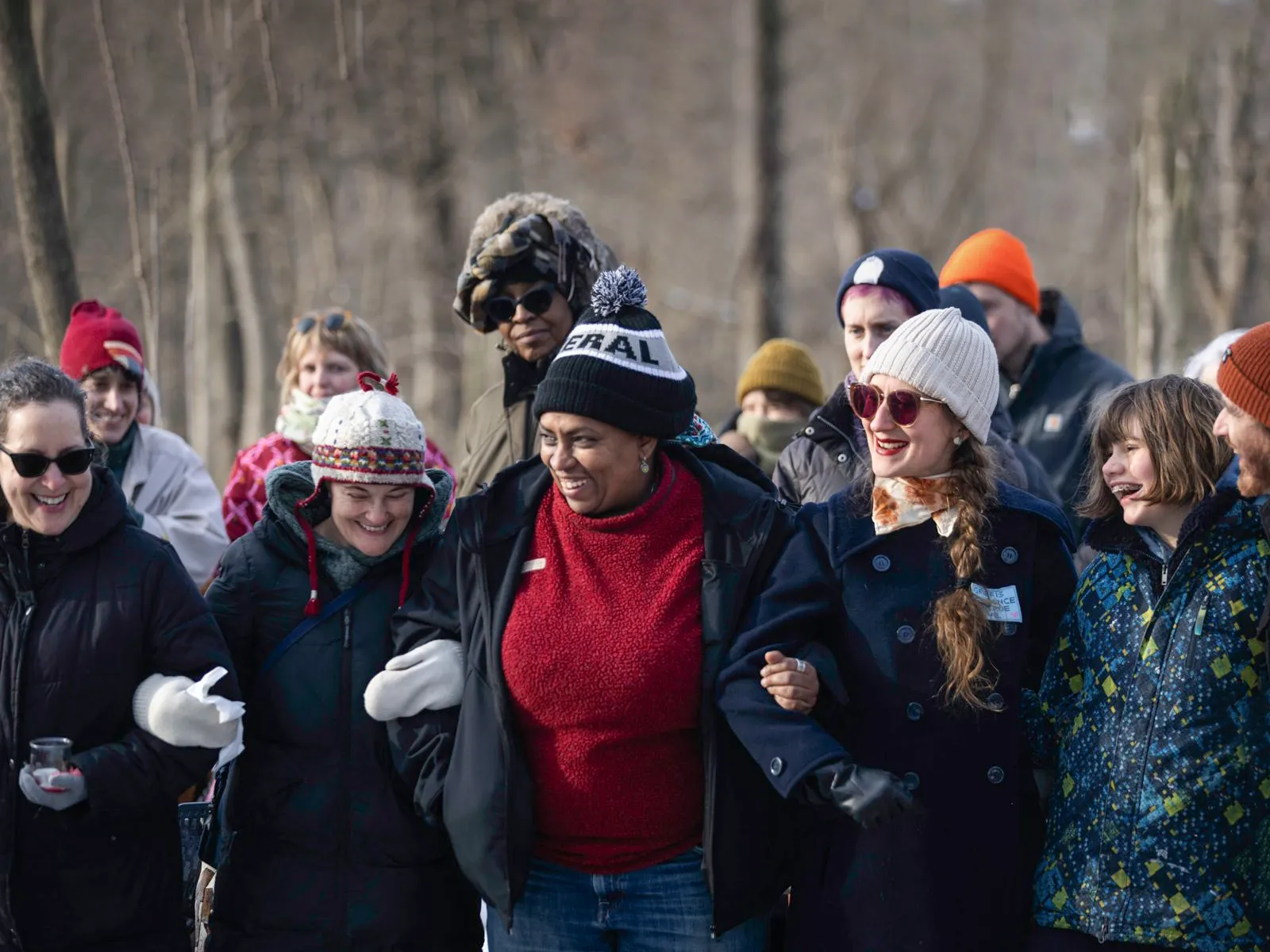
The burial service was three days later, at the Penn Forest Natural Burial Park in Pittsburgh. The service was gorgeous. I couldn’t find words, so I’ll give you Maranie’s perfect description. She said this:
A stunning day. Bright white snow and rare winter sunlight contrasted with colorful flowers, a trail of petals leading to Hanna’s gravesite. There were many intricate and heartfelt details, readings from loved ones who spoke Hanna’s words, poems and from a children’s book, and Hanna, a winter goddess adorned with a woven wreath and sacred fabrics. I cannot imagine a more beautiful celebration of Hanna and of the community she was central in manifesting. Beautiful, and an example for me and I suspect many others on how we might one day be escorted from this life. Sitting with it all, in awe.
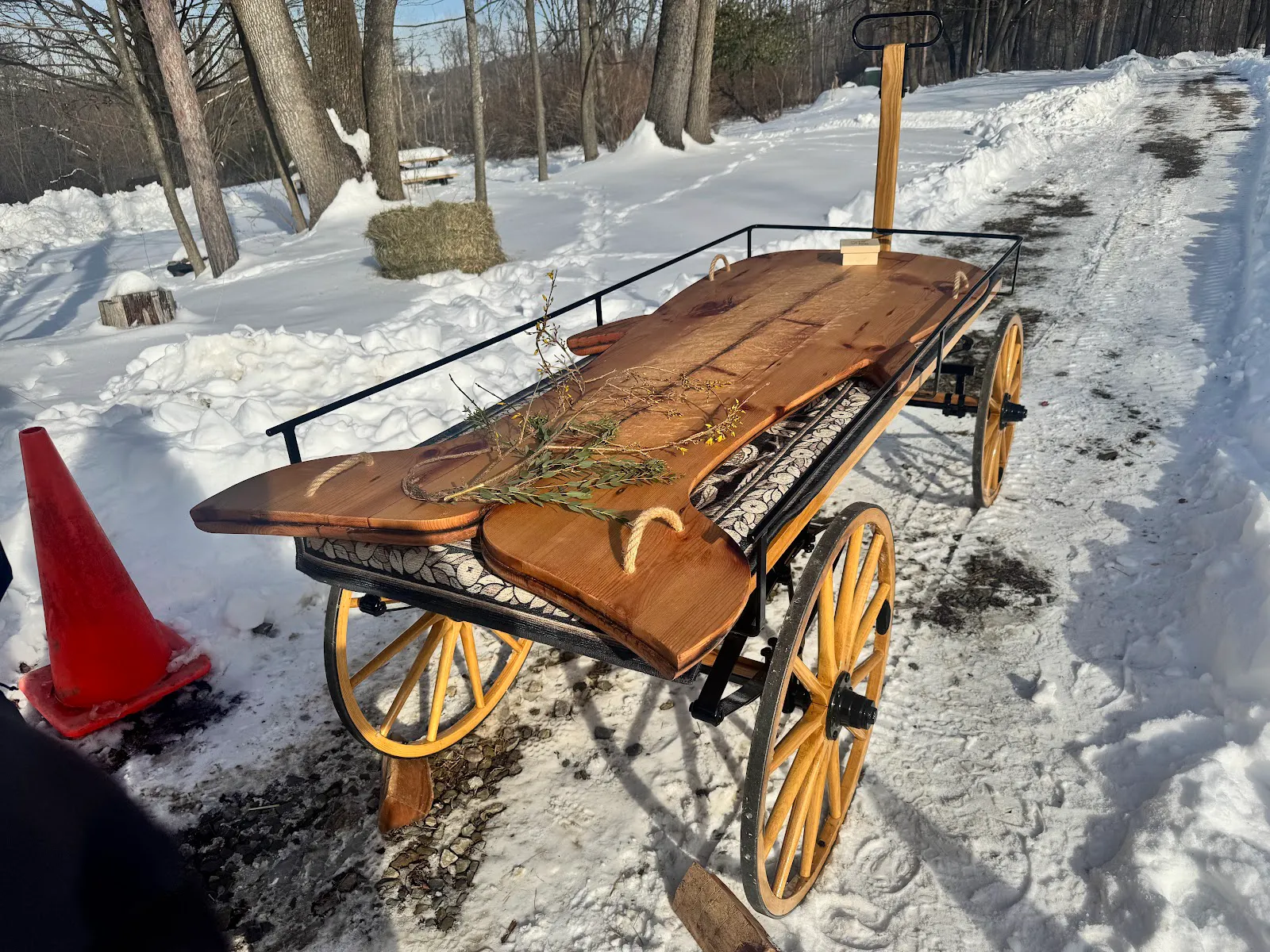
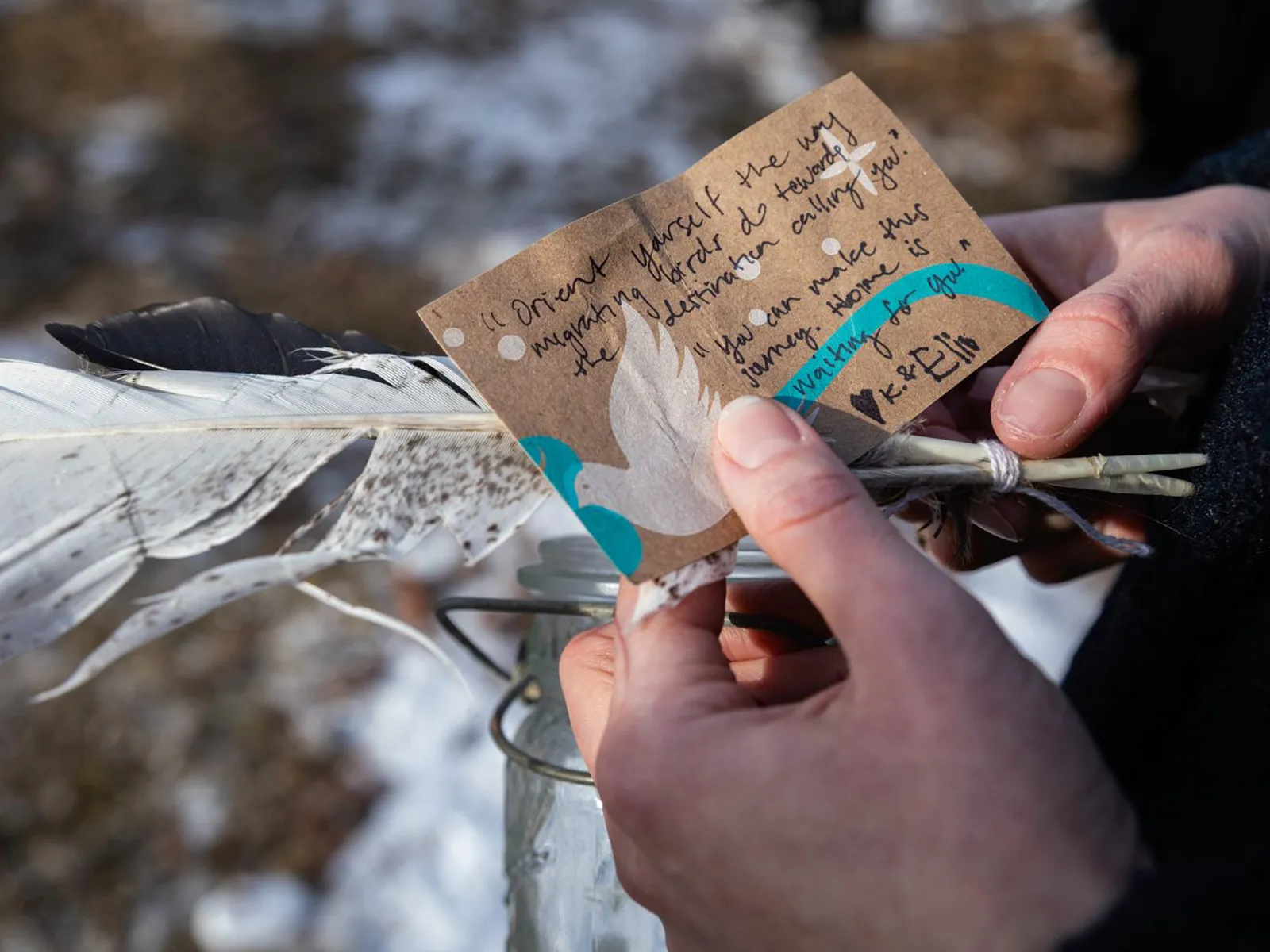
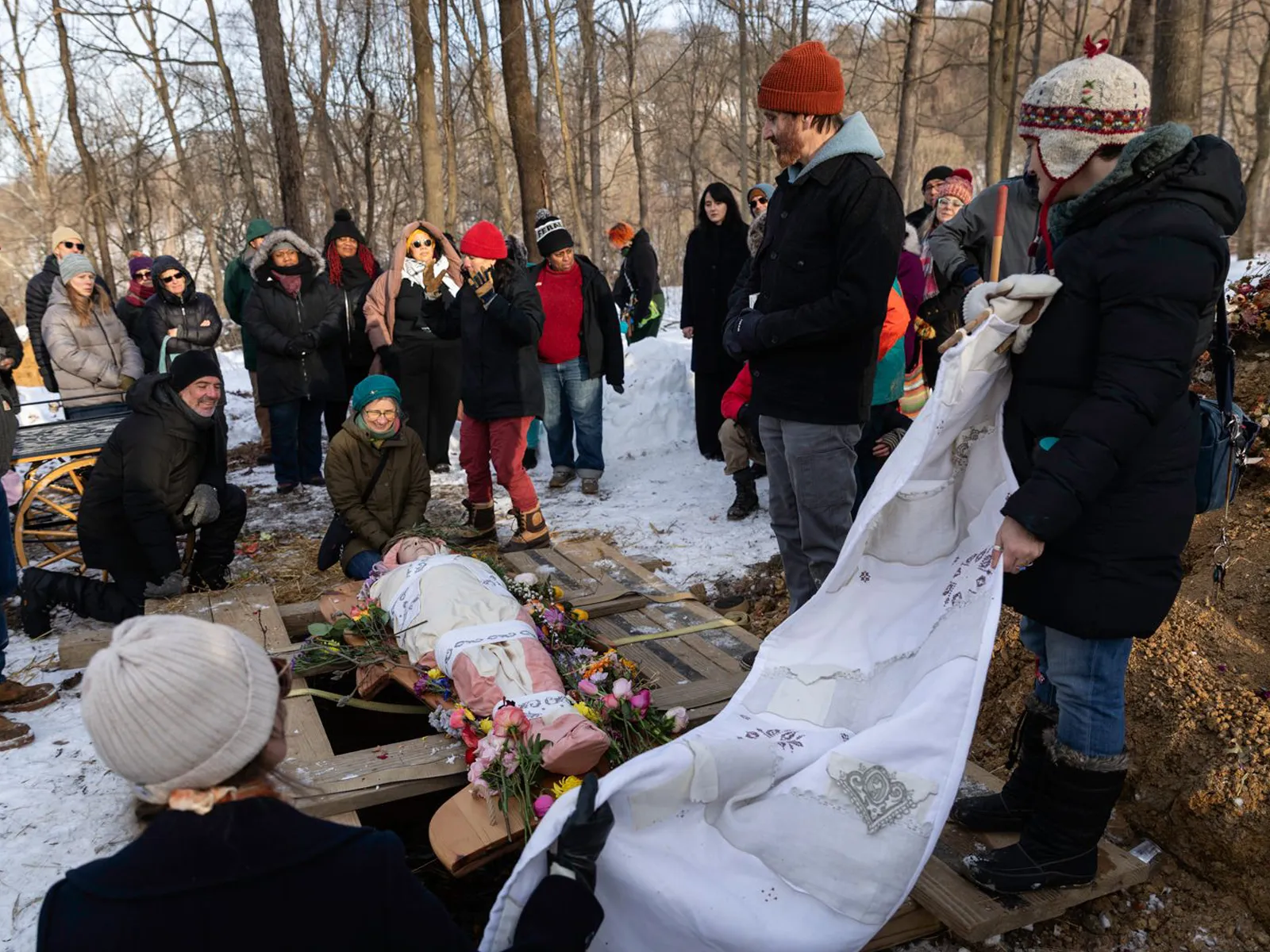
Picture 5 shows the quilted panel with pockets created by Christina Worsing and Katy Dement— created so that Hanna can be the messenger of “letters upstairs”—loving notes and letters from this side to the other. It was placed between Hanna and her silk shroud. Christina and Katy used some of Hanna’s linens to create the little details.
Rituals Everywhere
Hanna touched people. So many in South Africa. People in Chicago, New York, and Dublin. Colleagues everywhere, and hundreds of students around the world. So Hanna and Careforce collaborators looked for ways to help loved ones everywhere honor and celebrate their connection to Hanna, their loss, their grief.
One result is a document called Grieving Hanna from Wherever You Are, with resources on grieving and death, and suggestions for hosting a memorial wherever you are. It opens with a message from Hanna:
Dear Physically-Distanced Beloveds,
It pains me that I cannot say goodbye in person and that you can’t be together at my grave. As I’m getting more isolated, the feeling that we belong to each other grows. I feel my love and gratitude for you. I’ve experienced too many deaths that just went by because I could not be at the funeral or in community. So somehow the loss went unacknowledged and settled in my bones, making my steps a little heavier. I’d like my death to become an invitation to stop for a moment and feel, held in the embrace of fellow travelers.
Thank you for hosting a gathering after my passing, online or in person, to come together in shared love and loss. Each of you receiving this is part of a community that has held and sustained me. I’m hoping that my passing can be an occasion for gathering to hold and sustain each other. It needn’t be a big deal, a small group is great, and it can be whatever you want it to be.
My friends put together a few tiny objects that represent me. This is an invitation to gather, and an encouragement to not let death—mine or others’—go unmarked.
It would comfort me to know that my people will be together.
With love, Hanna.
Something Vast
I write this seven months after Hanna’s death.
Last week I had dinner with a woman who knew Hanna a little, subscribed to these updates, and was a quiet observer in the Careforce WhatsApp group. She told me two stories. Paraphrased, they went like this….
“A young woman I know recently told me she has cancer, and is beginning treatment. A few days after she revealed this news, a spreadsheet started circulating, started by someone else who knew Hanna and Careforce. It had dates and times to be with this woman when she went for tests and treatments, and to make sure she was seldom alone. And people just showed up. And are still showing up. I don’t think that would have happened without the Careforce example.”
Then, “a few weeks ago my mother said to me, ‘This is too much. I’m done. I want to die.’ A year ago that would have freaked me out. It would have silenced me, or I would have tried to soothe it over somehow. But I remembered: ‘Don’t look away.’ I was able to stay in it with my mom. Stay present. Ask her about it, be with her in the feeling. I learned that from Hanna and Careforce.”
“Grief,” we agreed one day over supper, “is a constellation of symptoms.” It’s not only sadness. For the first few months it expressed in my life as days of “I don’t want to.” Whatever it was, I didn’t want to. Others experience it differently. Many of us say things like, “I took a walk by the river. Hanna was there.” The form of Hanna’s life is now in the way she inhabits our being. As do we all in one another, more or less.
When people ask me about all this, ask how I’m doing, I usually say something like…
“It’s not that I’m sad, really. Some people seem to expect I’d be a sorry ship adrift on the sea. I’m not. The main feeling for me, every day, is that I have been close to something huge. I have been privileged to participate in a vast intensity of life. I know this experience set processes running inside me that are deeper than language, that I won’t understand or be able to describe for a long time. You might expect me to say this is all terrible. And it is. Hanna died. And also, it is wonderful. I can’t tell you exactly what I mean by that. I think it has something to do with a fresh relationship with death, and with life, and a sense that it is all so much bigger than I knew before.”
I’m grateful for you all. Everyone who is part of this story feels grateful for the host of people connected with these last three years of Hanna’s life. However near or distant, you are the life of the thing.
Sending so much love,
Marc
Links
Hanna’s message board
Still open, you are welcome to add your memory, gratitude, note to Hanna, etc.)
Some things to read on Hanna’s death
A collection compiled by Marc Rettig, with selections from Hanna’s writings on grief and a gathering of beloved poems
The Works of Hanna du Plessis – hannaduplessis.com
Home for continued support of Hanna’s writing (donations welcome)
Capturing Stubborn Joy
A beautiful piece in YNST Magazine on Hanna and Careforce, featuring photographs by our own Maranie Staab
Grieving Hanna from Wherever You Are
Suggestions and resources for holding your own memorial
Penn Forest Cemetery
A restful place